
Artistic Concept Statement: The Raging Tide in Southern Guizhou
I. Historical Significance
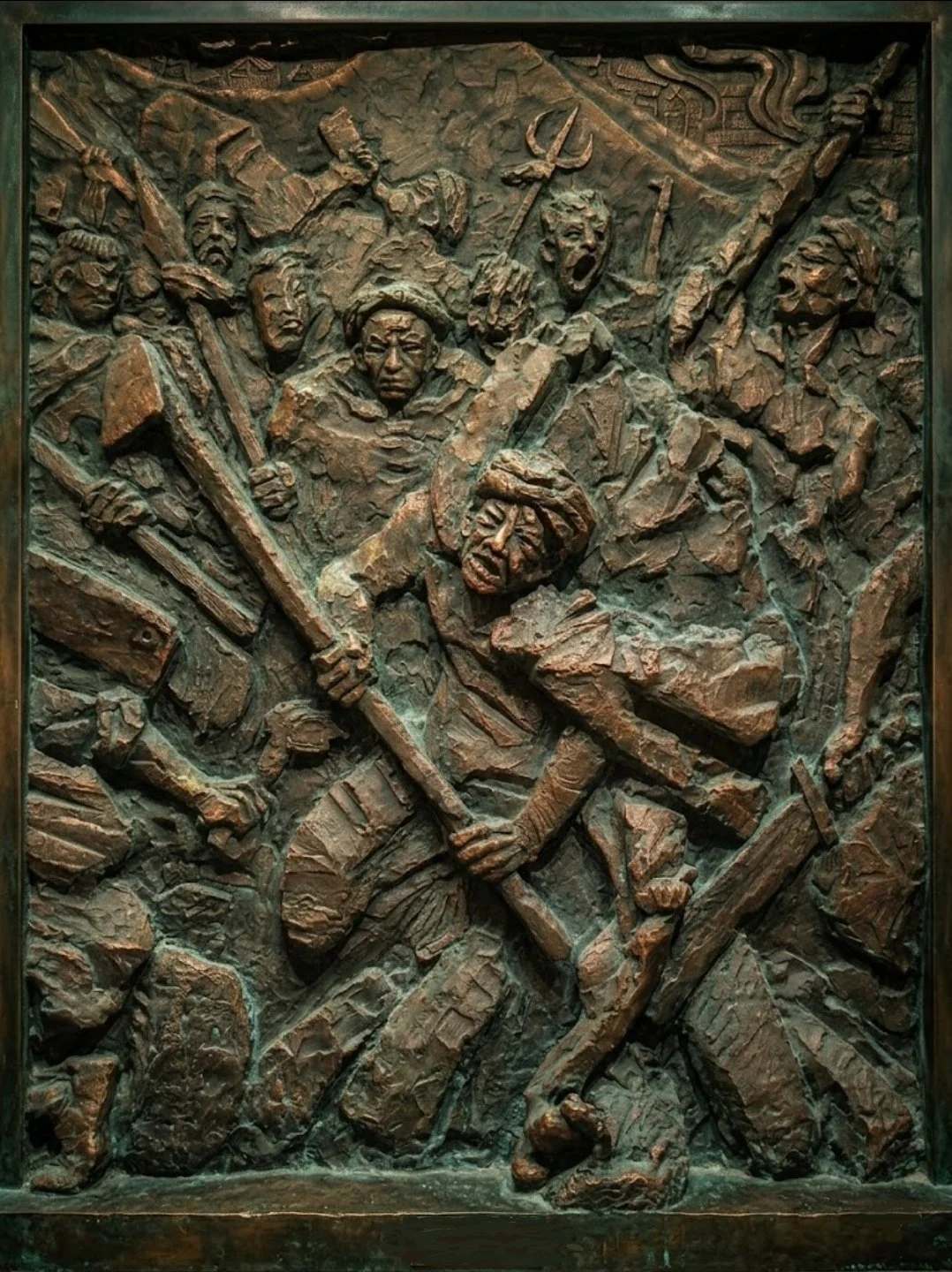
Created twenty years ago for the Shenhe Bridge Anti-Japanese War Memorial Museum, this monumental relief sculpture commemorates the historical resistance of ethnic minority groups in remote mountainous areas against the Japanese invaders. Shenhe Bridge marks the absolute furthest point of the Japanese ground invasion into China's interior, encapsulated in the prominent historical saying: "The war began at Lugou Bridge (Marco Polo Bridge) in the north, and was halted at Shenhe Bridge in the south."
II. Composition & Expression
The sculpture employs a monumental composition to capture the sudden awakening and fierce resistance of local ethnic communities (including the Miao, Bouyei, and Sui peoples) as their homeland faced existential peril. Breaking chronological constraints, the piece unifies these diverse heroes within a single, explosive moment. Figures interlace with powerful, rugged lines—some brandishing traditional hunting rifles, others hoisting broadswords, and an infuriated young cowherd brandishing a slingshot. The intense contrast of light and shadow highlights their indomitable fortitude.
III. Spiritual Essence
The sculpture embodies the immortal spirit of the past. It honors the unwavering courage of ethnic minority compatriots who defended their soil at all costs, illustrating how various ethnic groups united as one in the face of a national crisis. This "raging tide" at the banks of the Shenhe Bridge serves as an eternal hymn to the unyielding soul of the nation.
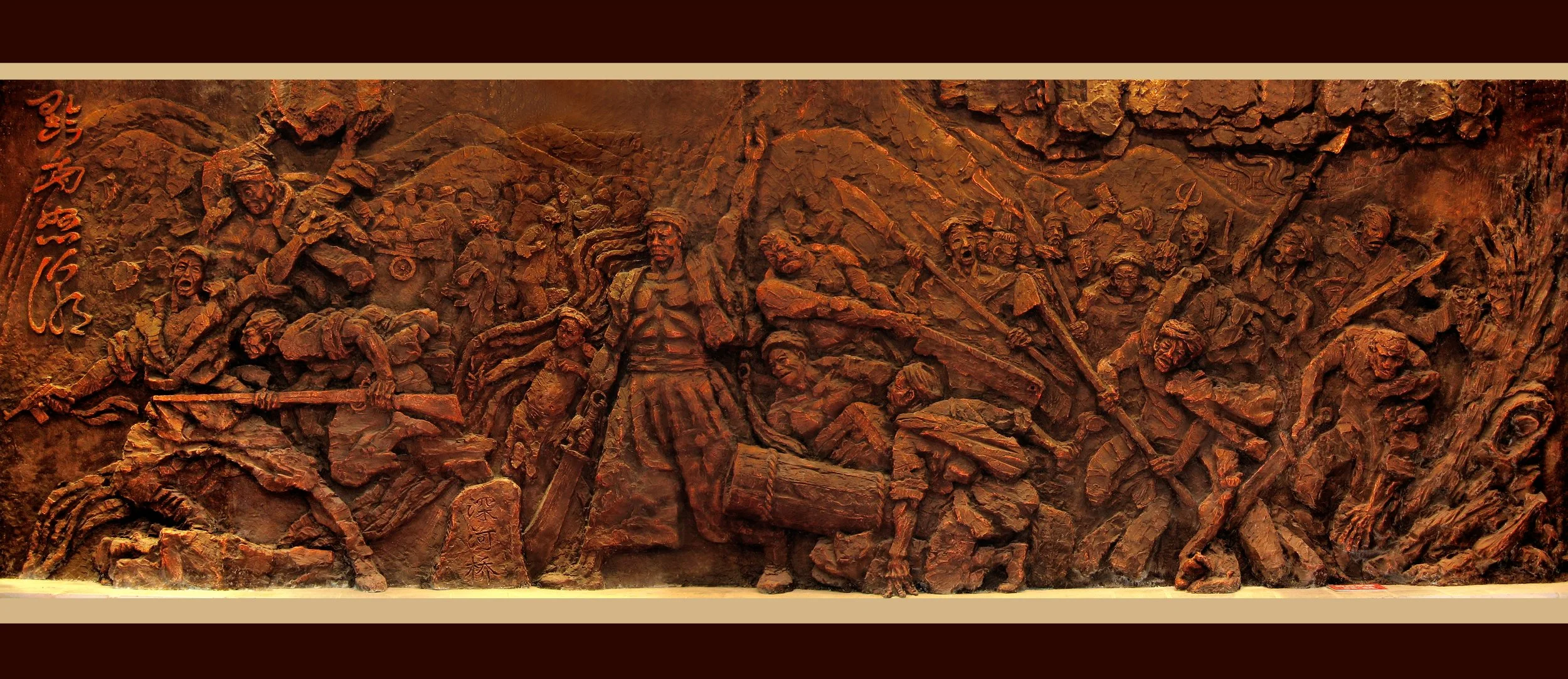
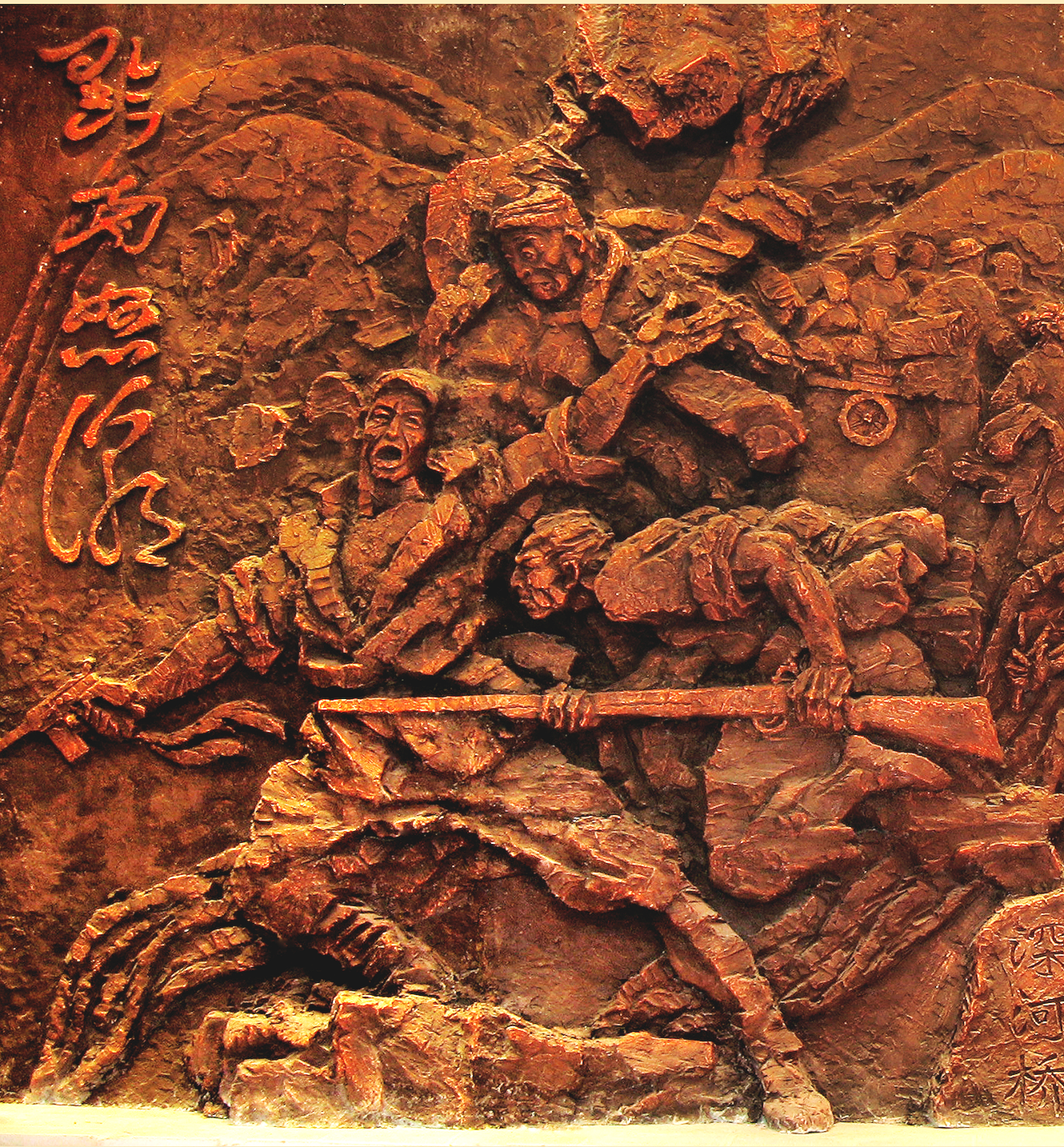
some brandishing traditional hunting rifles, others hoisting broadswords
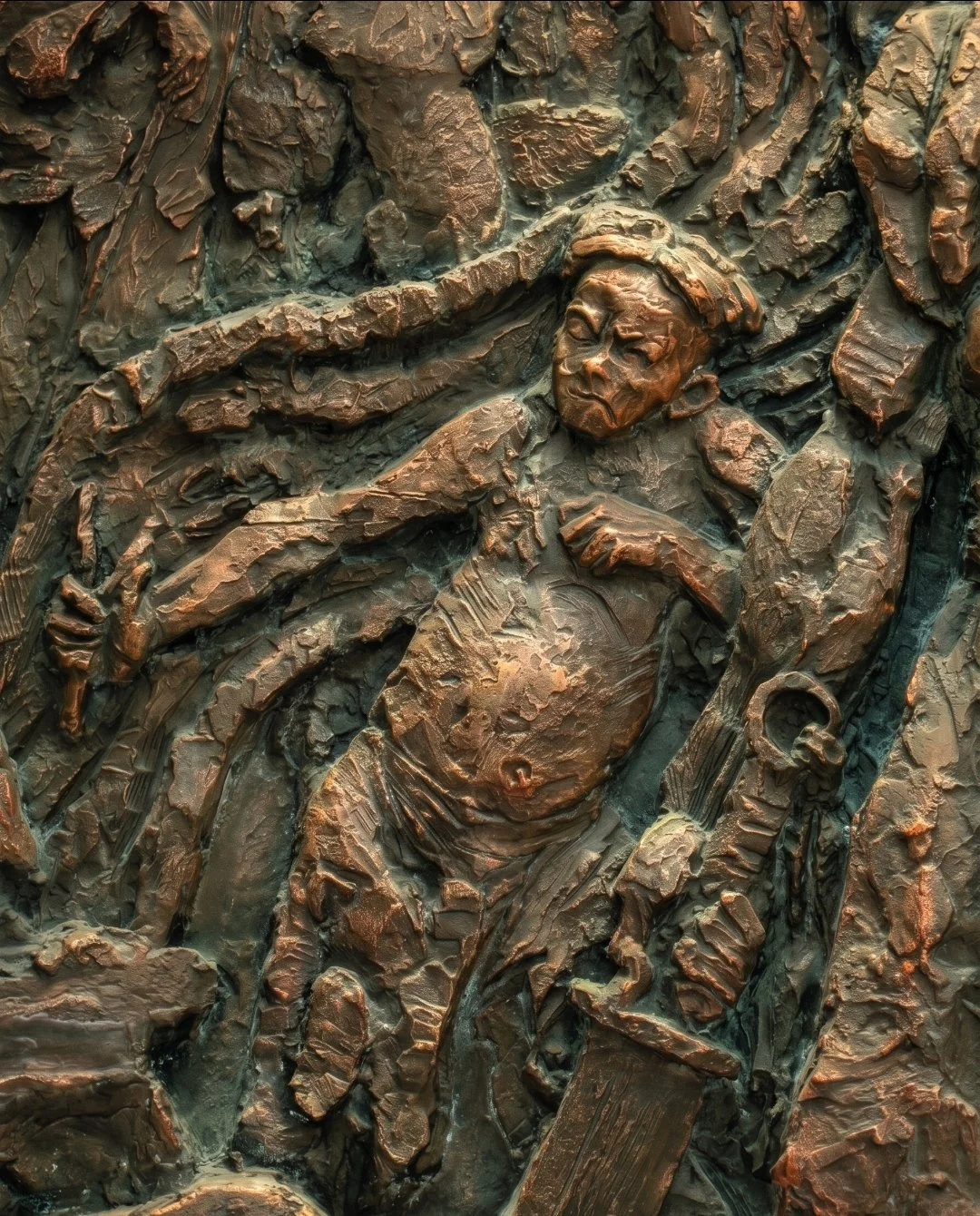
infuriated young cowherd brandishing a slingshot
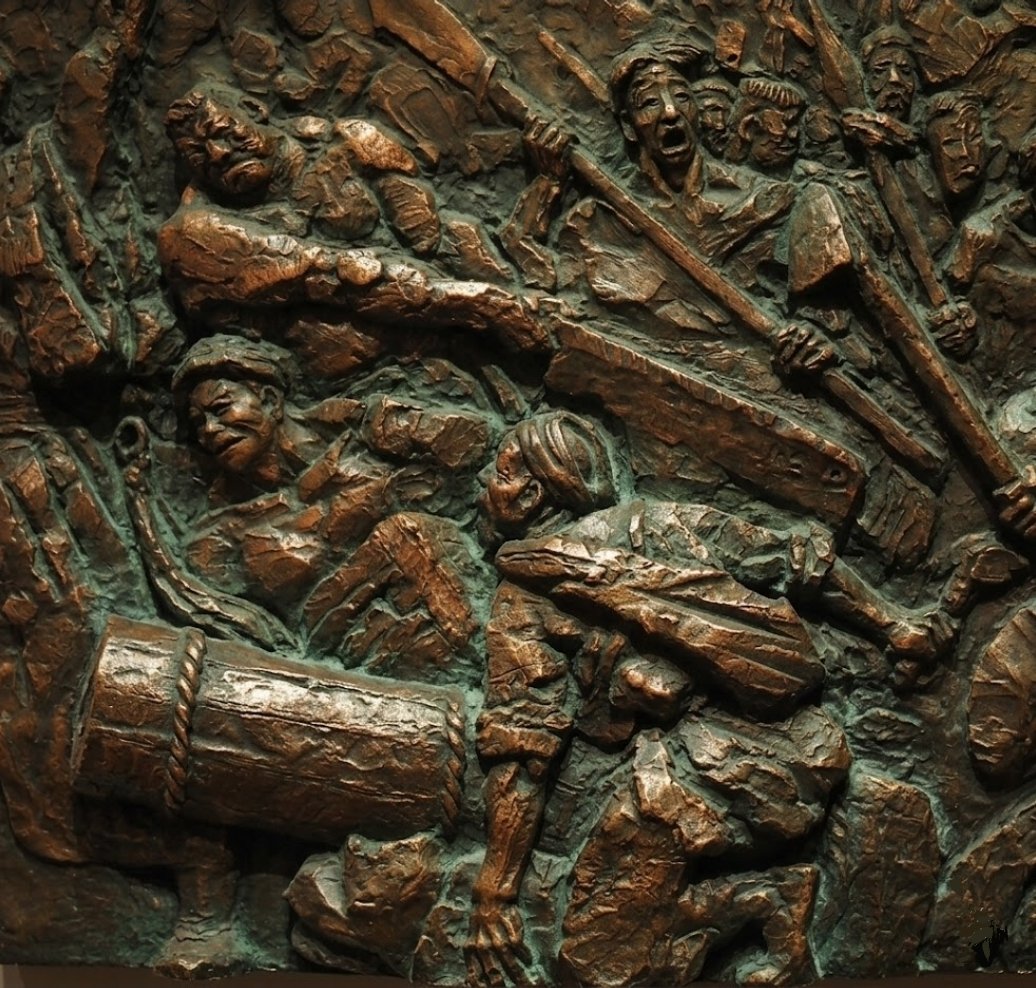
infuriated young cowherd brandishing a slingshot
the unwavering courage of ethnic minority compatriots who defended their soil at all costs