Female-soldiers Sculpture
Blood-Bathed Angels
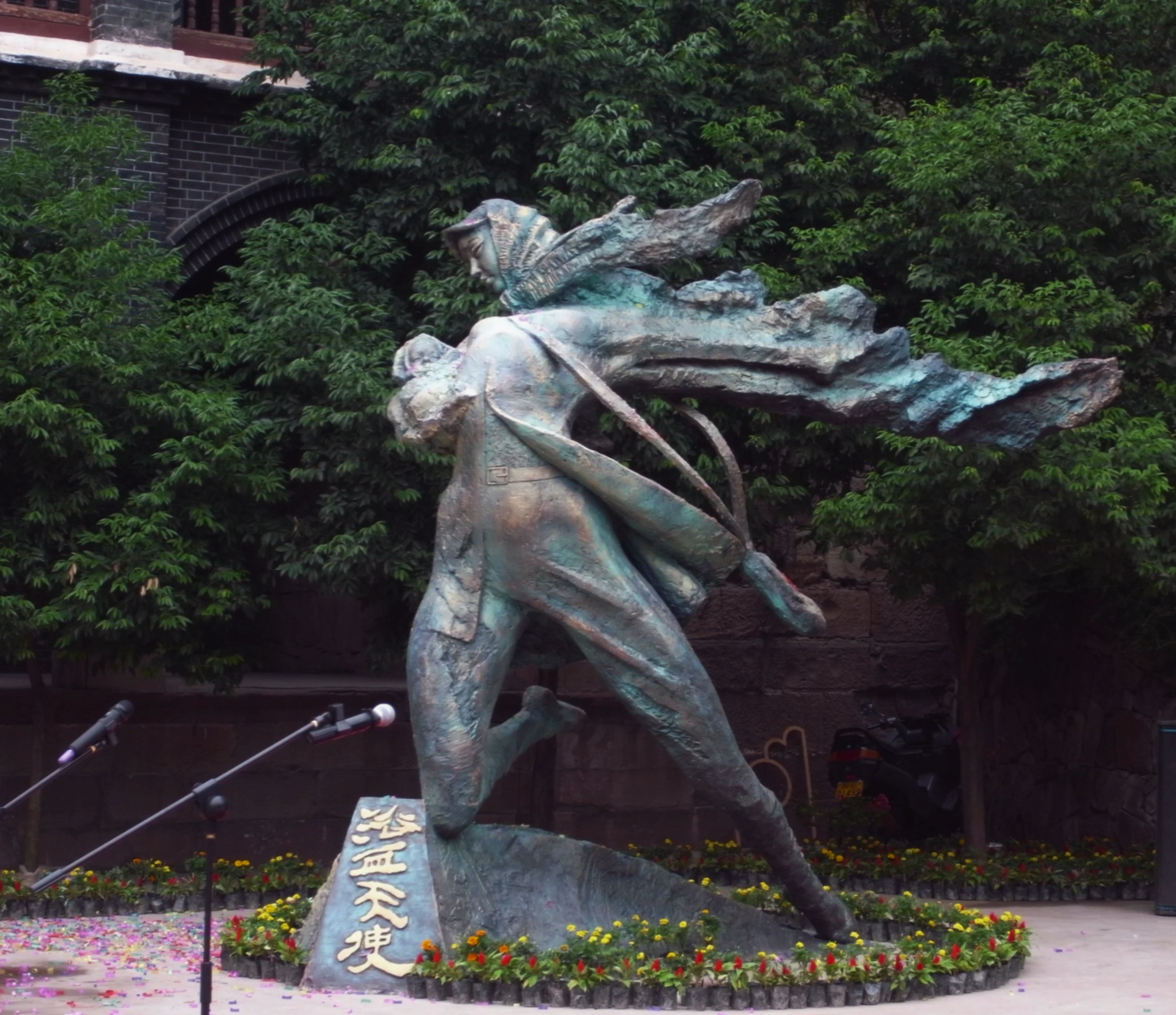
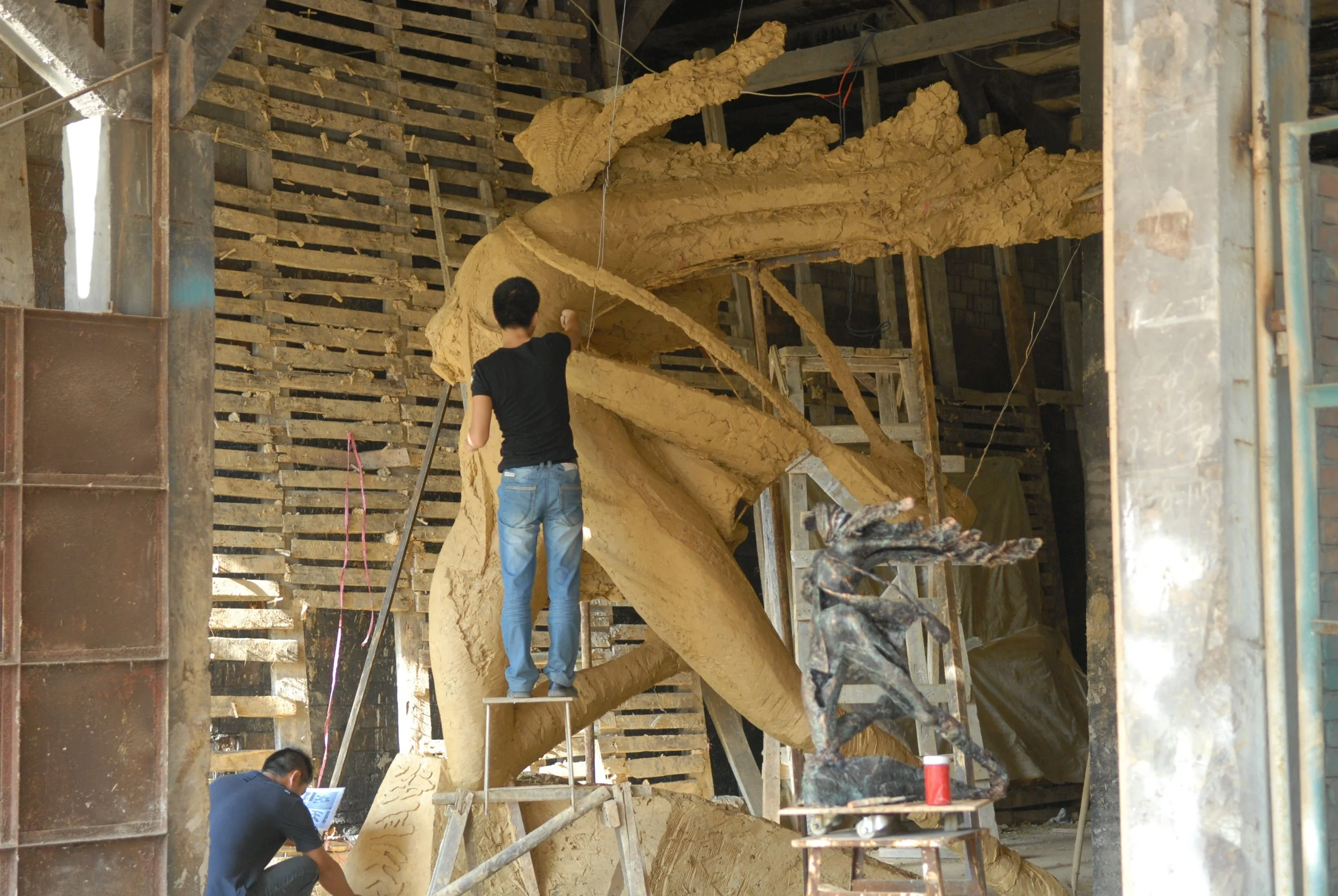
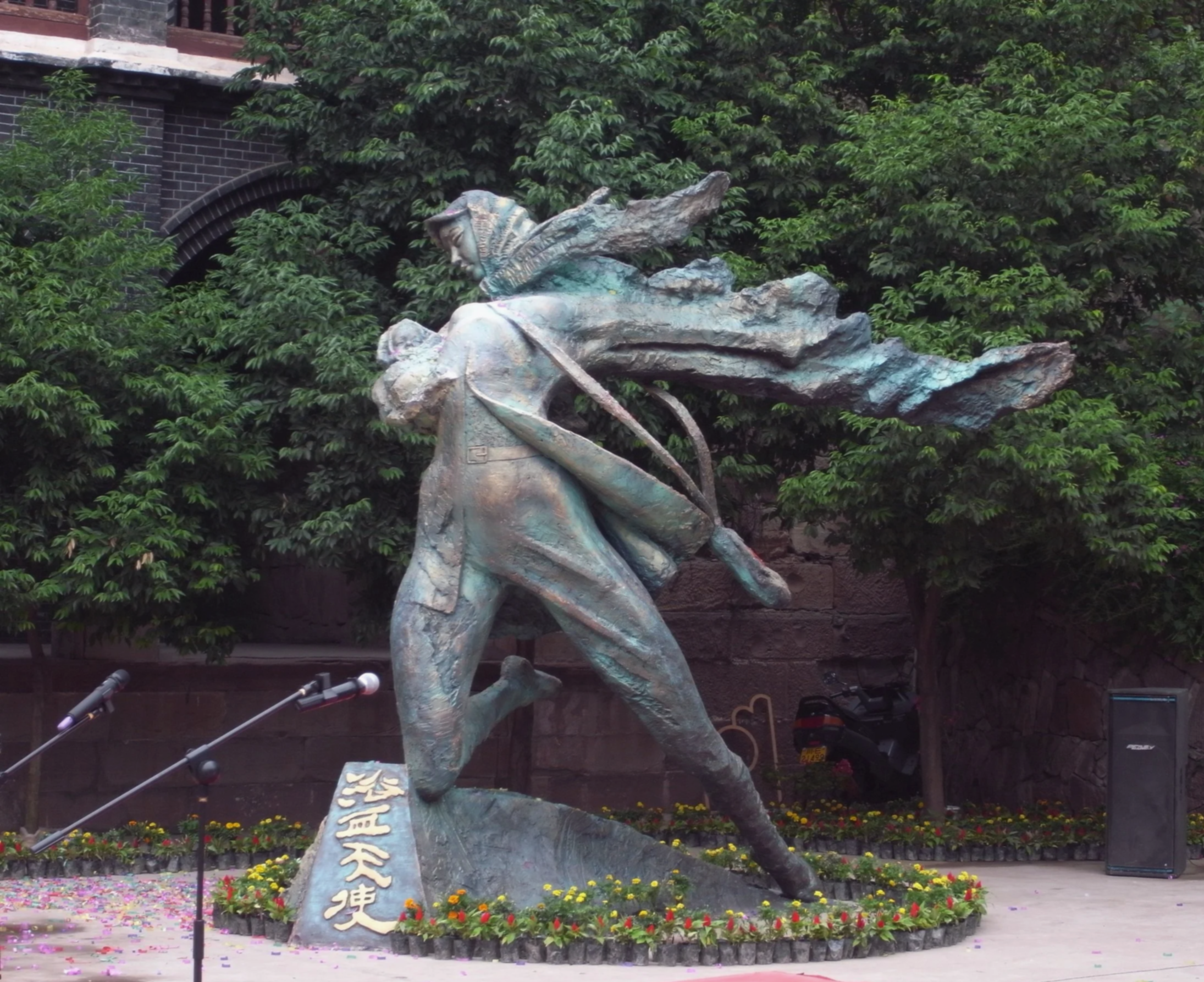
"Blood-Bathed Angels" is a large-scale cast bronze sculpture commissioned by the Memorial Hall of Chinese Women Red Army Soldiers to honor their enduring legacy. To ensure harmony with the surrounding environment, the height of the statue is set at 4 meters.
The Long March has not only left a precious spiritual wealth for the Chinese people, but has also long been widely acclaimed across the world. Yet, it remains little known that over 2,000 women Red Army soldiers participated in this epic journey. Side by side with their male comrades, they fought blood-soaked battles and endured the grueling trek. While some overcame insurmountable hardships to complete the Long March, others fell along the endless, arduous trail—in the heat of battle or on the march.
As time marches on, reopening this long-sealed, blood-stained history—veiled behind those monumental historic events more than 70 years ago—strikes a deep, shattering chord within our hearts, leaving us profoundly shaken.
Two Indelible Memories of Blood
In my own life, I carry two unforgettable memories of blood:
The first was a peculiar experience during my junior high school years. In a moment of extreme violence, one of my classmates clutched his chest and collapsed softly beside me. Blood surged through the gaps of his fingers, dripping from his elbow. What started as a single point rapidly spread into a pool as wide as a wooden basin. A vibrant, fresh life grew as fragile as mud in an instant, its soul drifting away with the steaming warmth of the blood.
For this, I was dazed for years. This blood signifies Death.
When I was young, I cared little for the meaning of life, focusing only on the purpose of living. Yet, when I cluelessly accompanied my pregnant wife to the hospital for delivery, watching her struggle in agonizing pain, I tried my best to feign lightheartedness and crack jokes. As more than ten hours passed, a sudden heaviness weighed on my heart. The moment I beheld the flecks of blood on the newborn’s face and the frail, pale countenance of my wife, my long-suppressed emotions erupted, breaking a drought of tears that had lasted for years.
For this, I was dazed for many more years. This blood signifies Life.
The Rivers of Red and the Echoes of the Mountains
Revolution inevitably demands bloodshed, and war turns rivers into torrents of blood. The Xiang River was dyed red; the Wu River turned red; the Chishui River ran redder still; even the waters of the Dadu River blushed with blood. The entire path of the Long March was imprinted with a succession of blood-colored footprints. Countless blood-bathed battles and life-or-death struggles tempered every soldier fighting for their red faith, making them all the more resolute and heroic, their held-high heads and the red stars on their octagonal caps gleaming with the glory of victory.
Yet, within the endless, rolling mountains, how many bones of martyrs remained soaked in blood, never to rise again? In the boundless darkness, they rapidly vanished into time and space, accompanied only by the biting wind howling over the snow-capped mountains. In that wind echo the roars of soldiers, the wails of mothers, and the cries of infants. The sounds rise from the earth, passing over freshly sprouting grass, piercing through thorny thickets, sweeping across forests and high peaks, and vanishing into the clouds above. Light and clouds exhausted all their strength to retain her shadow, projecting it back down to the mortal world.
And thus, the "Blood-Bathed Angel" descends by our side.
The Duality of the Angel: Remembrance and Cherishing
As a "Blood-Bathed" Figure, She Demands We Remember:
The meaning of blood to life.
It is the bloody trail left on the rainy mountain path as He Zizhen, suppressing her agony after childbirth, was forced to abandon her newborn.
It is Zhang Qinqiú, who, having just given birth, gritted her chattering teeth against excruciating pain to mount her horse and continue commanding the battle, her fresh blood dyeing the entire saddle red.
It is Division Commander Chen, who fought to the bitter end and, refusing to be captured by the enemy, tore open the bandage around his abdomen and severed his own intestines...
Their blood must not be shed in vain, and for the birth of a new world, it was not shed in vain!
As an "Angel," She Reminds Us to Cherish:
They exhausted all that life had to offer for the sake of "Love."
It is the tragic love song of Wang Quanyuan, who searched for her love for over half a century after surviving a narrow escape from death.
It is the cries of He Zizhen in later years, searching for her abandoned child amidst the vast, endless mountains...
Yet, to transform this old world and pursue a grand ideal, they willingly embraced peril and sacrificed themselves, even if their names faded in the long river of history and blurred in collective memory. This selfless, boundless love is something we must never forget; it is the very essence that this nation needs most to cherish and remember.
How Do We Cherish This More Than 70 Years Later?
Memory has become ruined fragments, like an old, long-deserted house, steeped in the poignant desolation of a place where things remain but people have changed. The more it is so, the more it stirs the soul to reminisce. Is she in the dark, damp room? Amidst the weed-choked rubble? Within the growth rings of the rotting wooden beams?
Look—where the roof leaks, several beams of sunlight pierce straight down, and it turns out she is right there. Having transformed into an angel, she no longer possesses a mortal frame; she has become the ubiquitous sunlight and air, gazing tenderly upon this world between night and day. We cherish her just as our lives cannot do without sunlight and air. We look up to her, for it is she who allows our narrow minds and selfish souls to open up. We breathe her in, for it is she who fills our blood with passion and makes our muscles robust and strong.
The Language of Sculpture
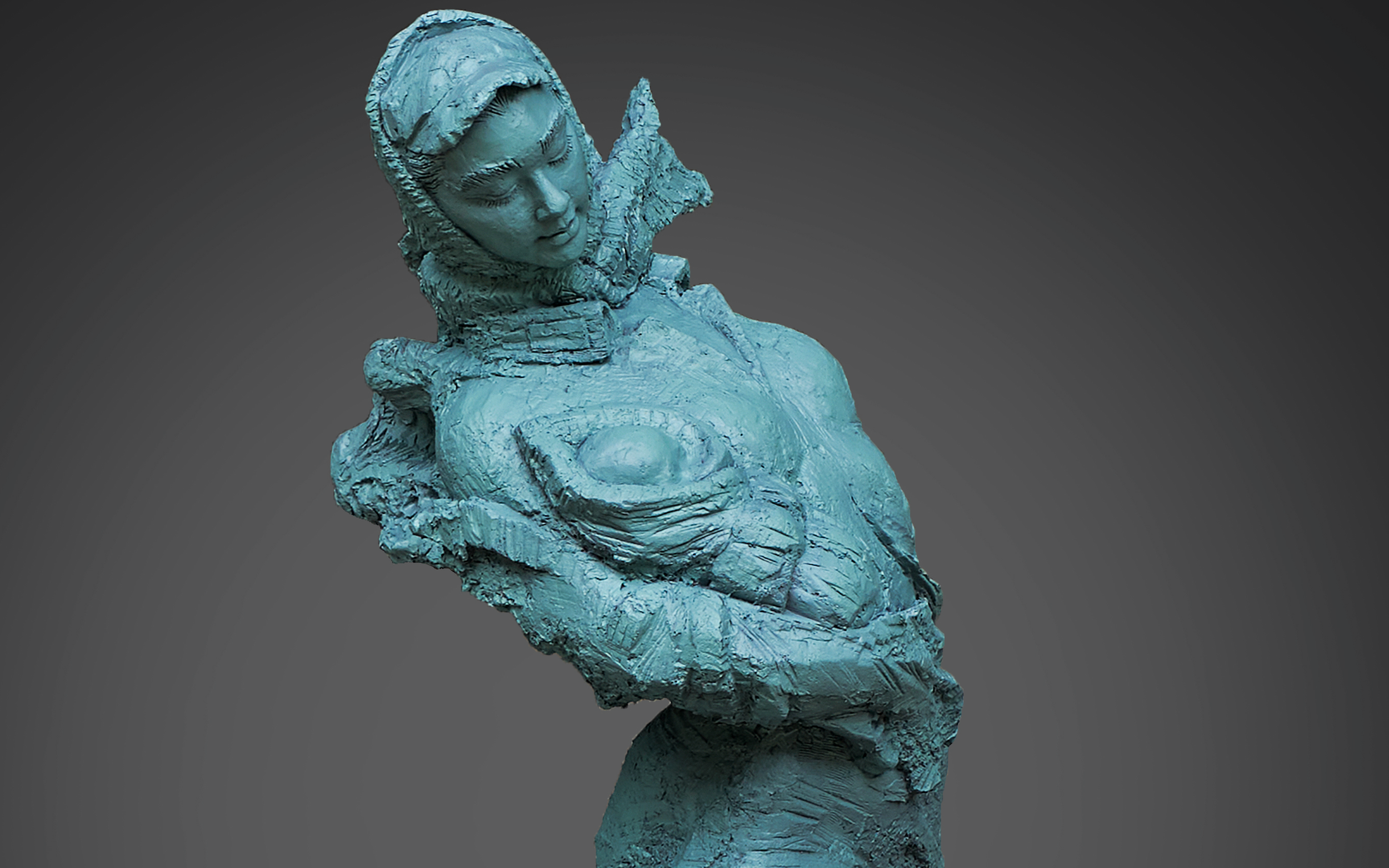
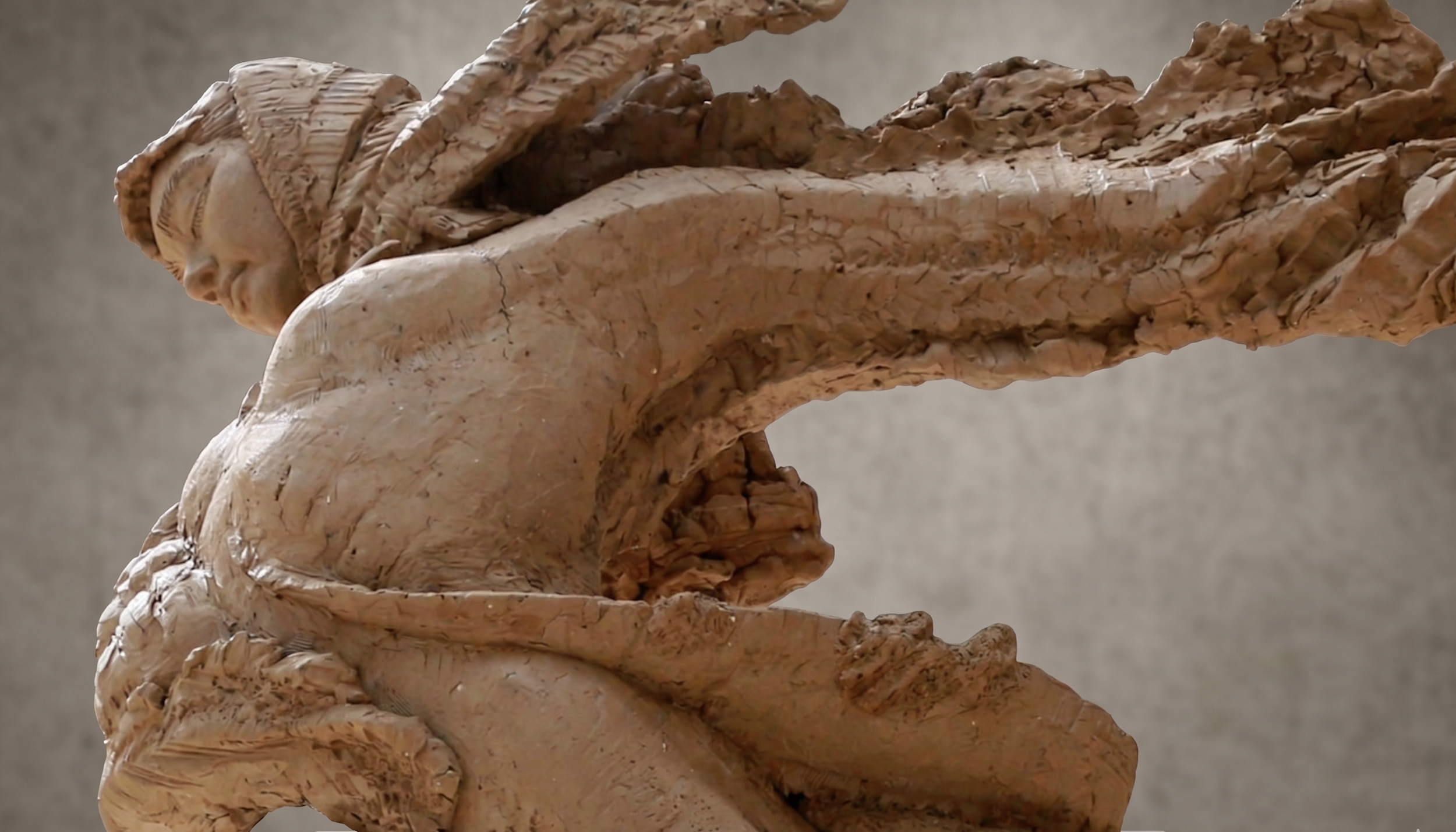
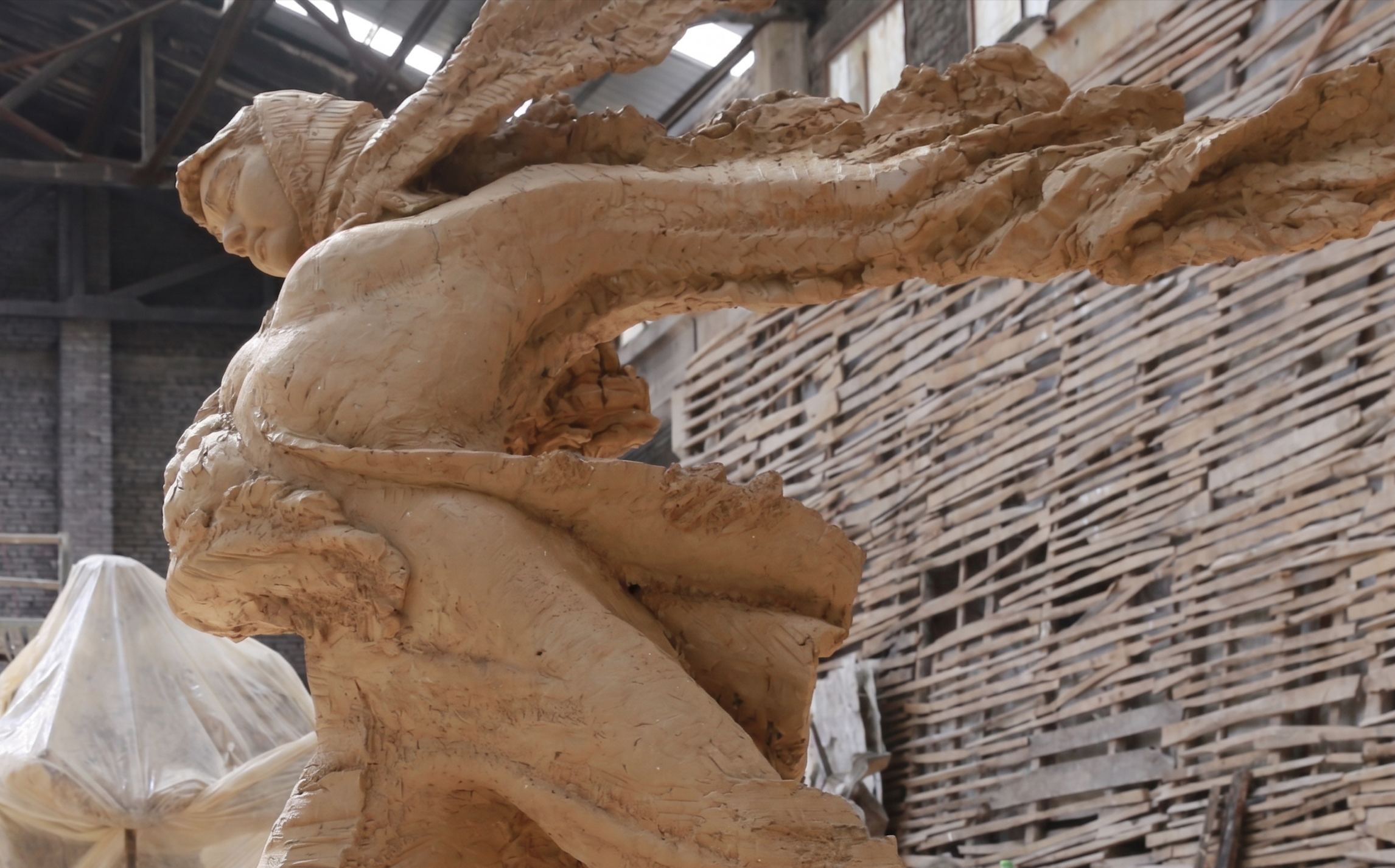
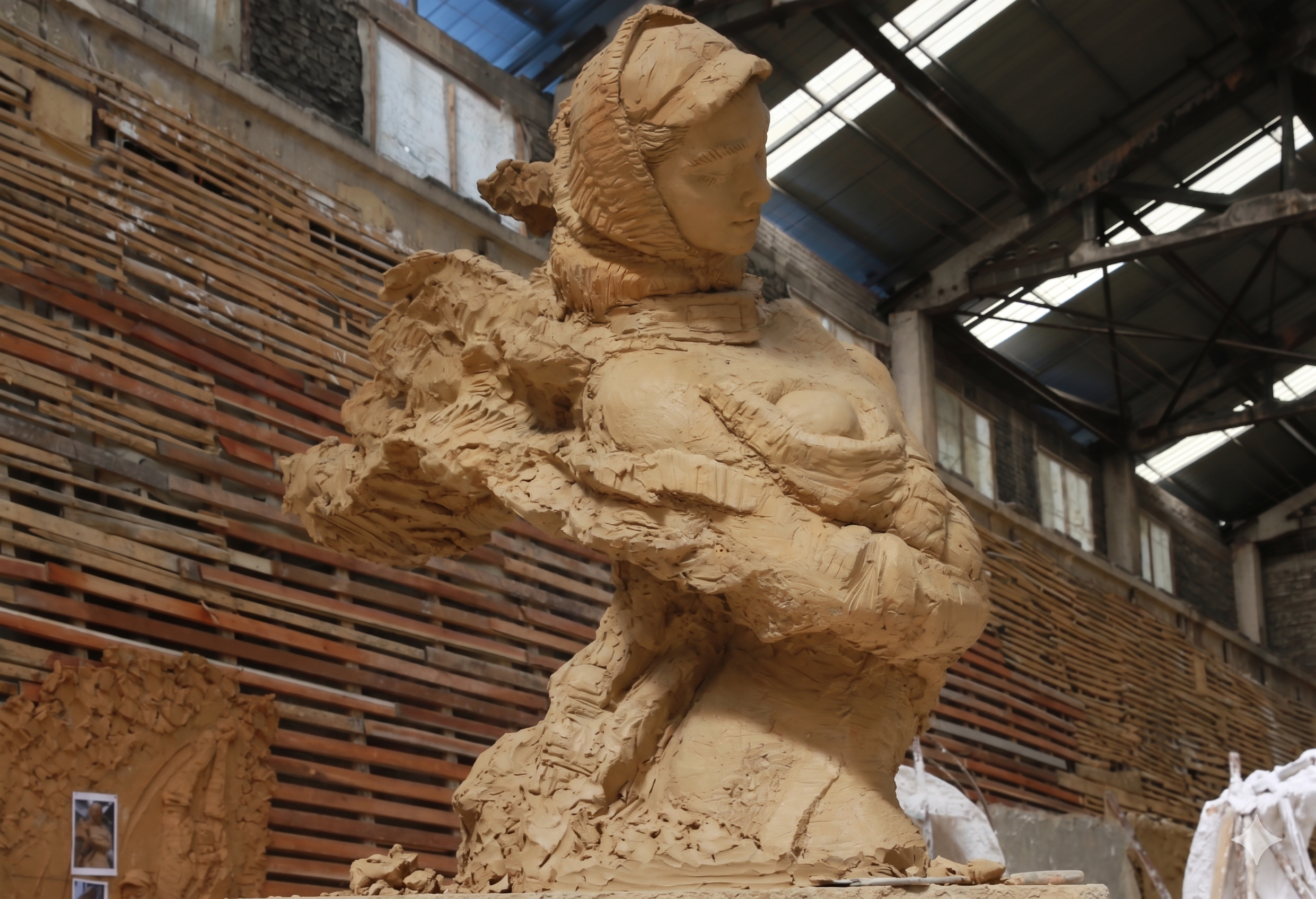
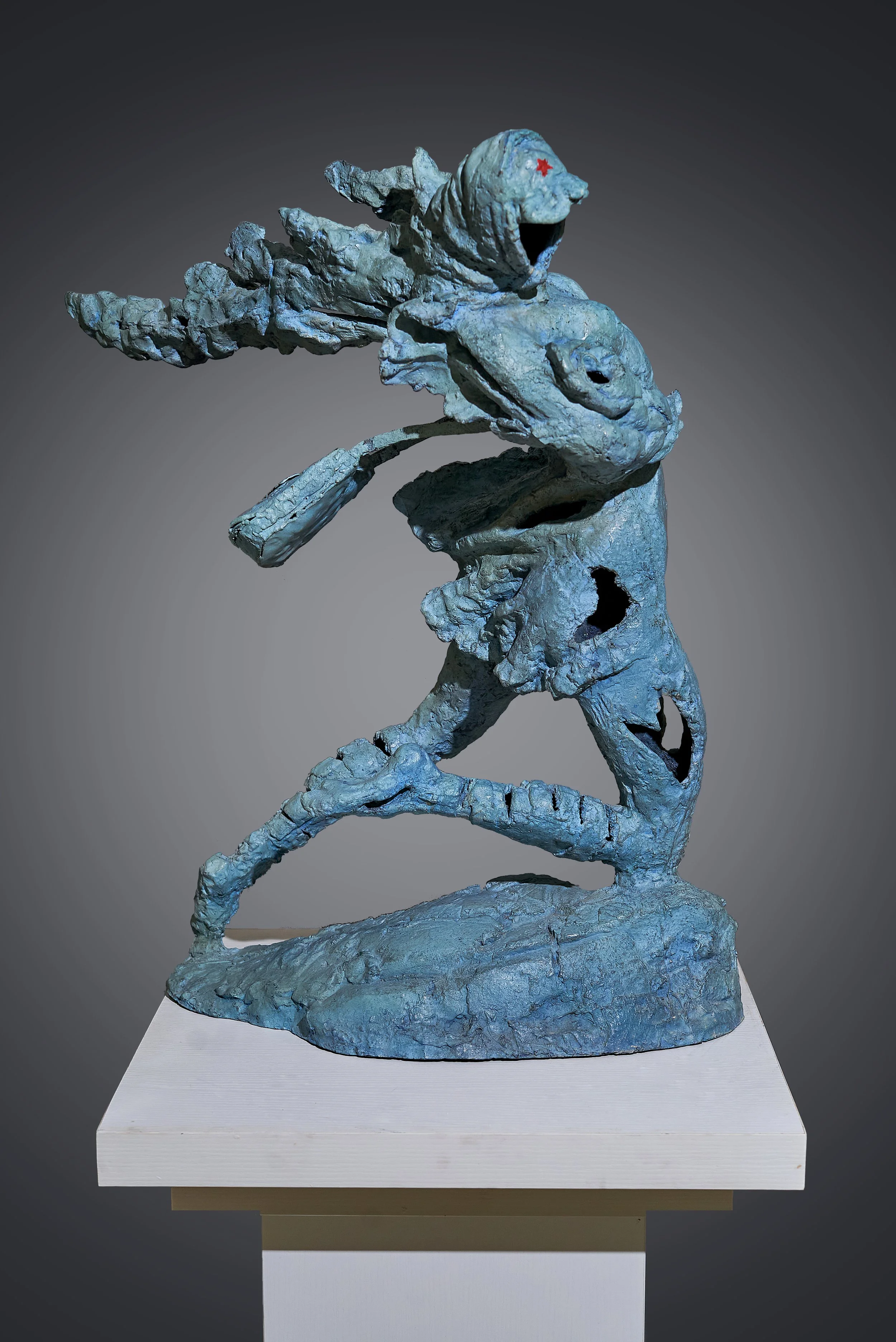
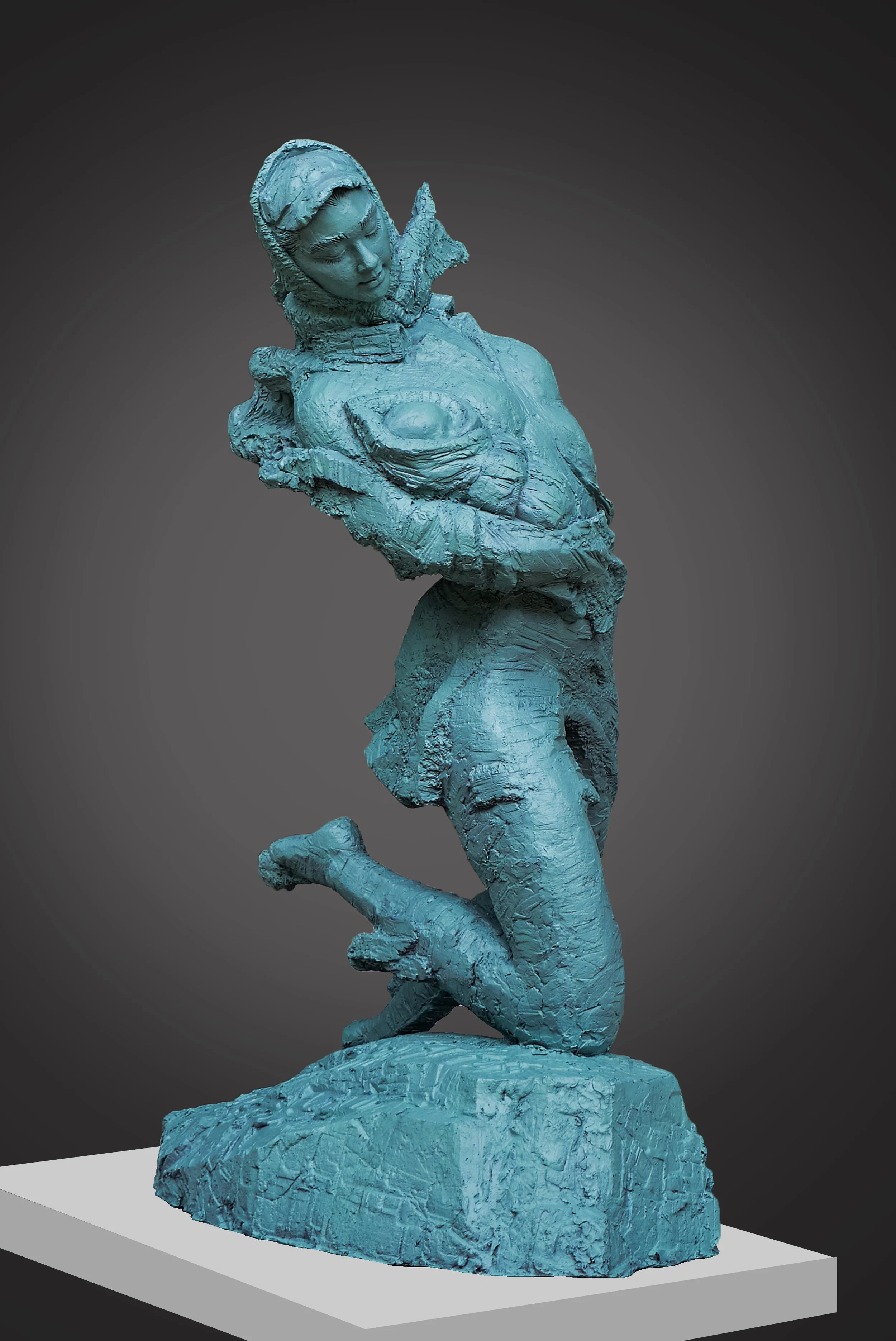
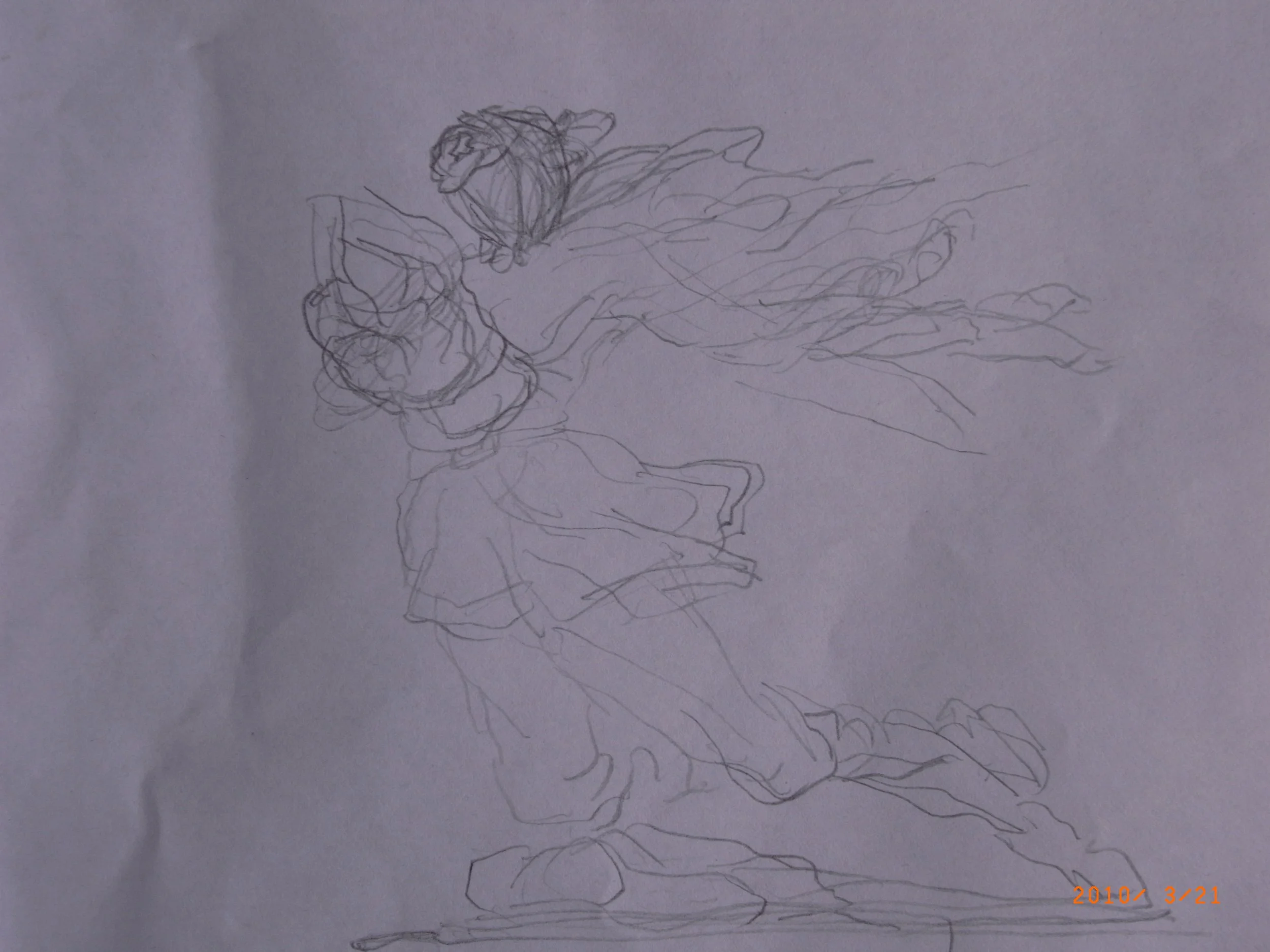
Because of all the above, the sculpture employs a highly fluid, dance-like posture to manifest the woman Red Army soldier's harmony of strength and tenderness.
From one perspective: The soldier cradles a swaddled infant in her left arm, leaning against the child with a tenderness as soft as water—a poignant and moving sight. Her struggling torso symbolizes the unimaginable pain and torture women endured during those bitter years.
From the right perspective: She takes on a dynamic forward-plunging silhouette, embodying her noble spirit of defying hardships, sacrificing personal love for a greater love, and willingly giving her life. Her extended right arm is artistically rendered as a wing, symbolizing her taking flight. She will soar above numerous hardships, forever hovering in this glorious sky of history, reflecting in the heart of every viewer.
"Lonely Chang'e widely spreads her sleeves, Dancing through the boundless sky for these loyal souls!"