Sculpture Statement: The Four Crossings of the Chishui River
The "Four Crossings of the Chishui River" was a pivotal and defining campaign during the Long March. Faced with intercepting forces of overwhelming numerical superiority, the Red Army relied on highly fluid and maneuverable strategies to execute a breathtaking strategic breakthrough along the borders of Sichuan, Guizhou, and Yunnan provinces. This sculpture seeks to recreate the military intelligence, poignant heroism, and epic nature of this campaign through ingenious composition, symbolic motifs, and a poetic visual lexicon.
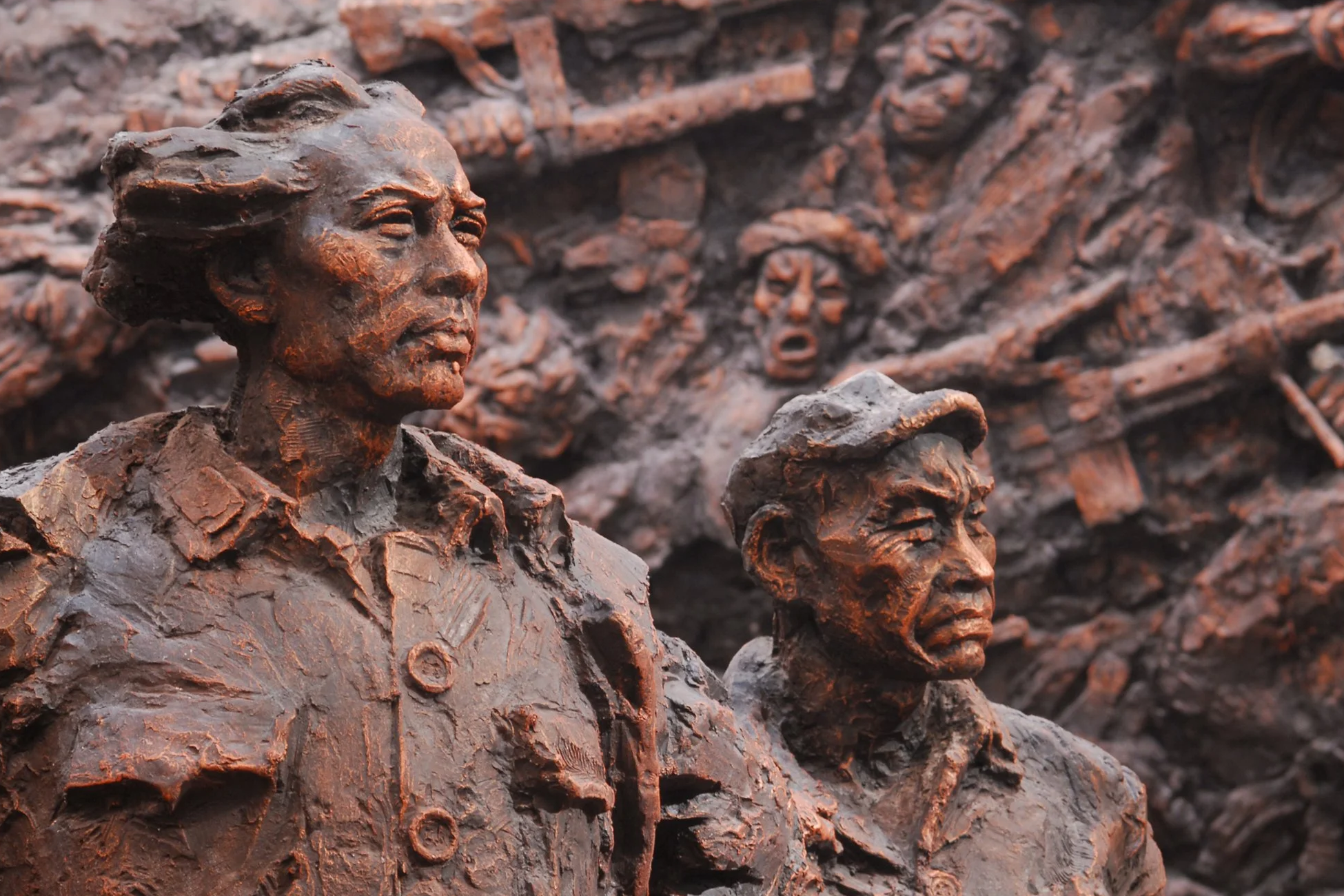
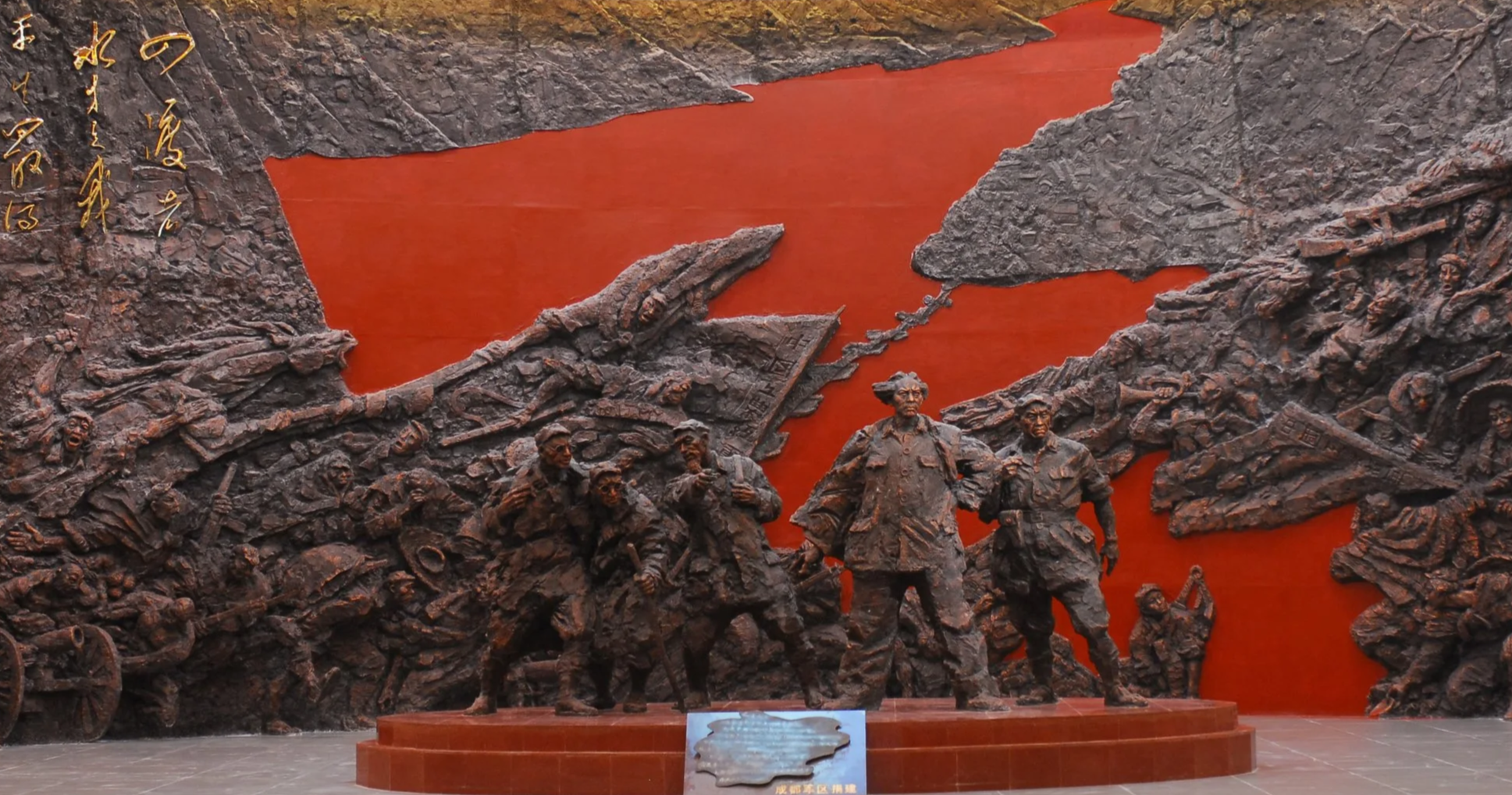
To break away from the conventional, singular composition of traditional sculpture, this work integrates high-relief and free-standing sculpture (ronde-bosse):
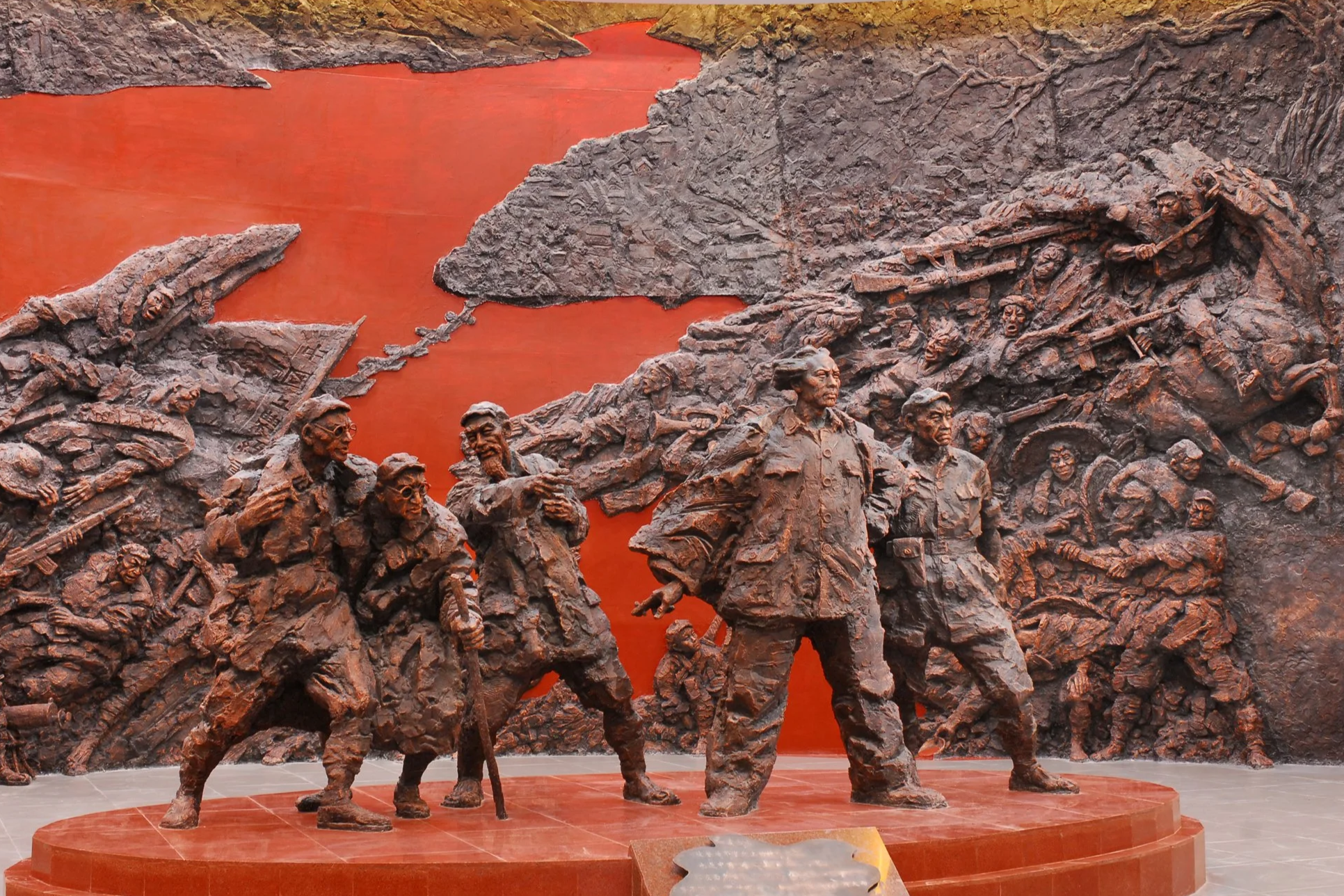
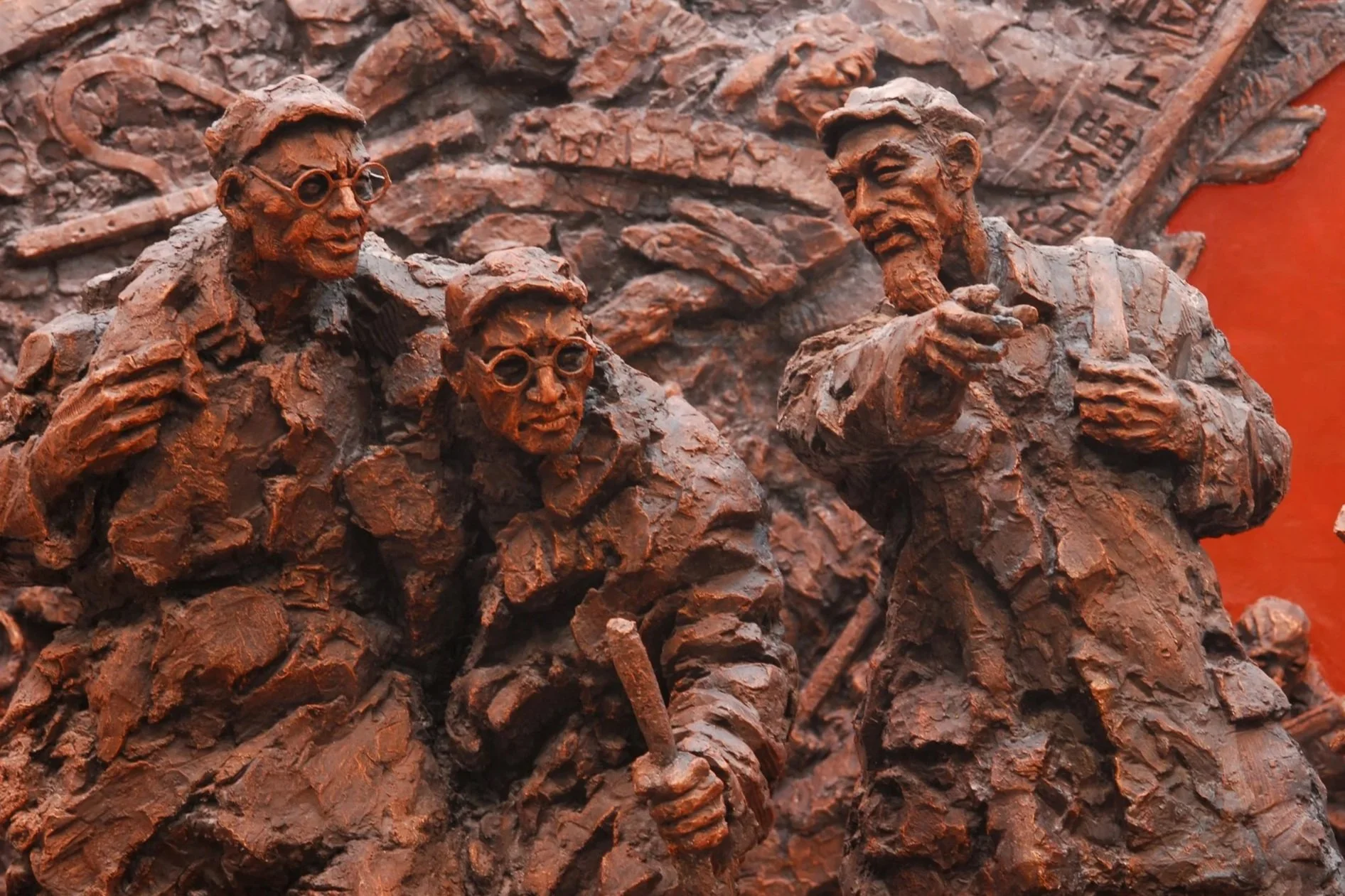
The Foreground Free-Standing Sculpture: This section focuses on the core decision-makers of the march. Mao Zedong gazes into the distance with steadfast confidence, while Zhu De unbuttons his collar with a calm demeanor. Zhang Wentian supports the wounded Wang Jiaxiang, symbolizing solidarity and cohesion amidst extreme adversity. Zhou Enlai points forward, reflecting acute situational awareness and deep camaraderie. Positioned centrally as solid forms, this group portrait conveys a profound serenity in steering the course through turbulent times.
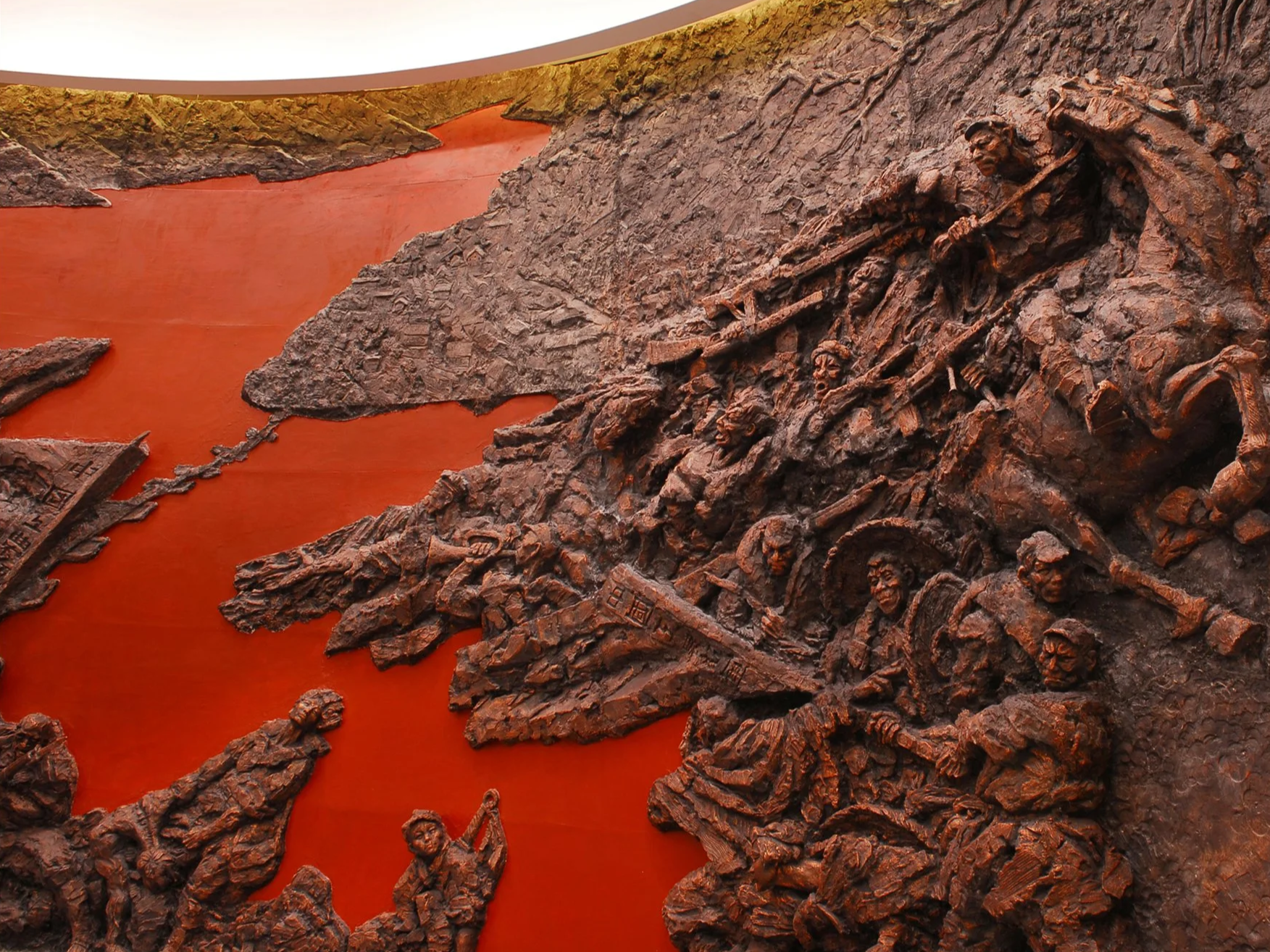
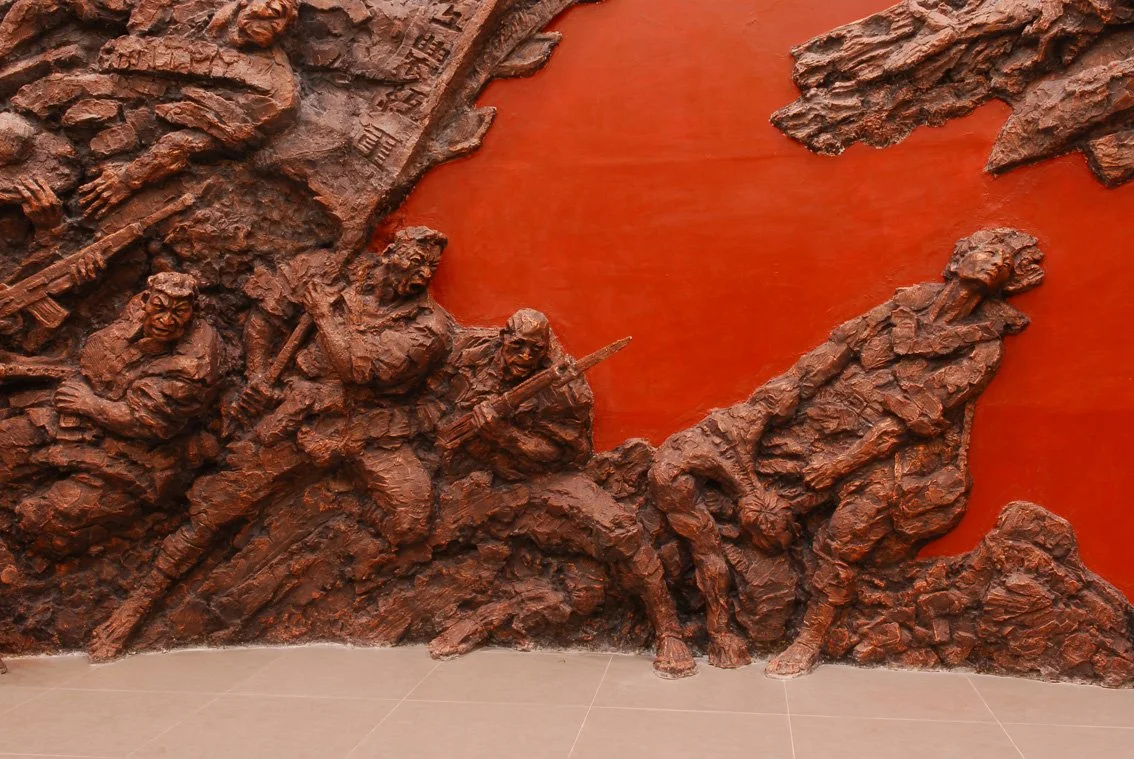
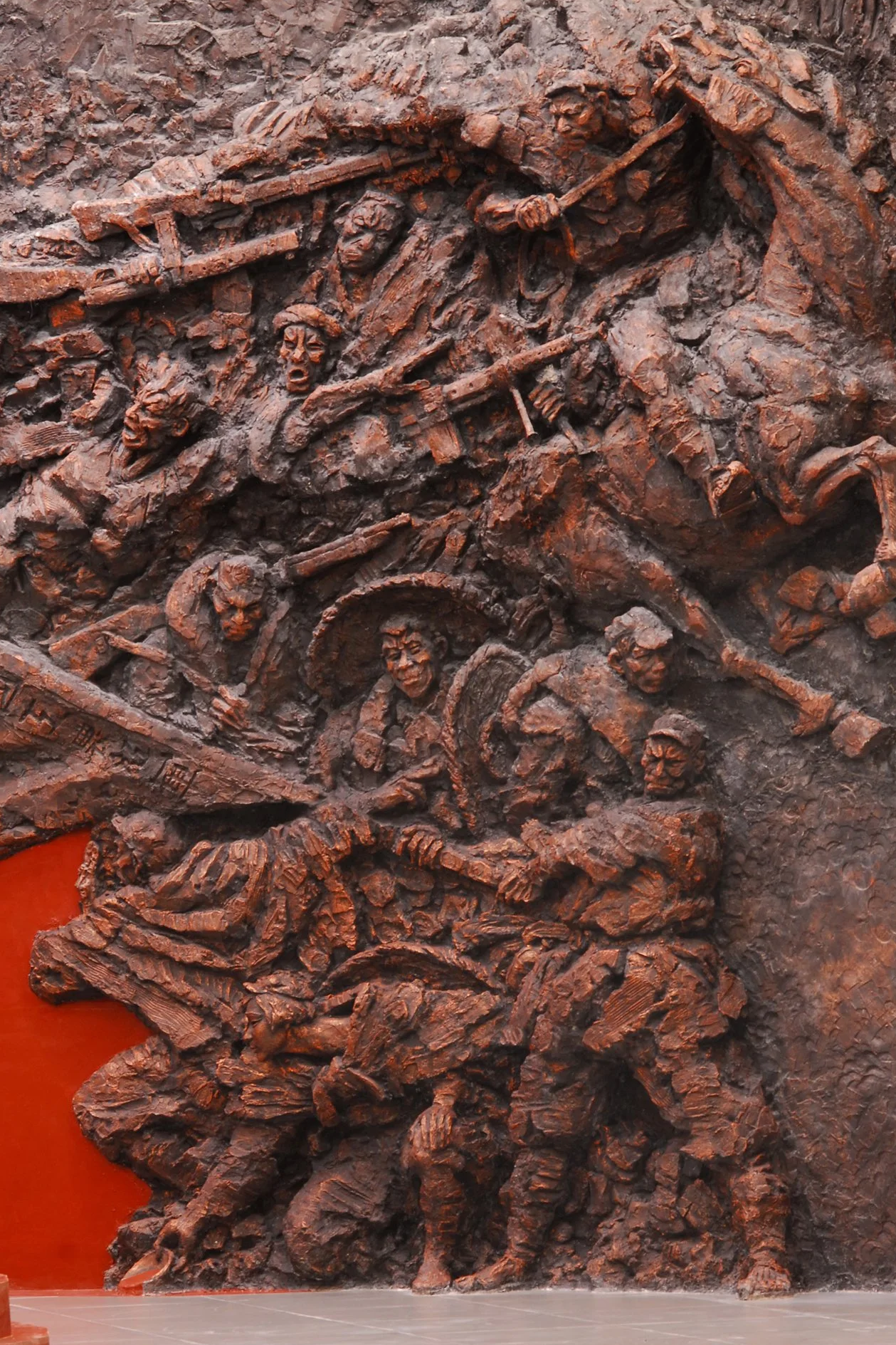
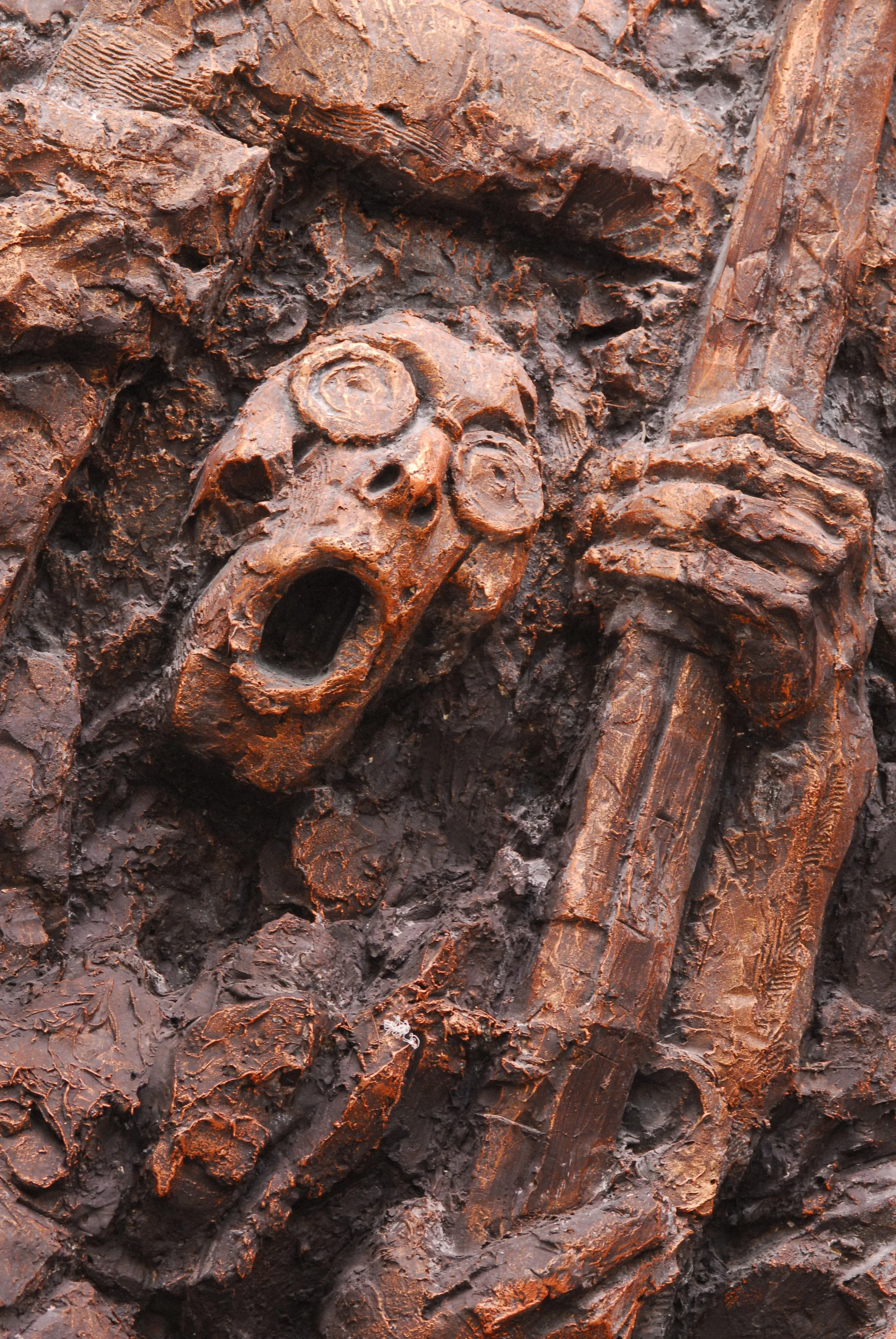
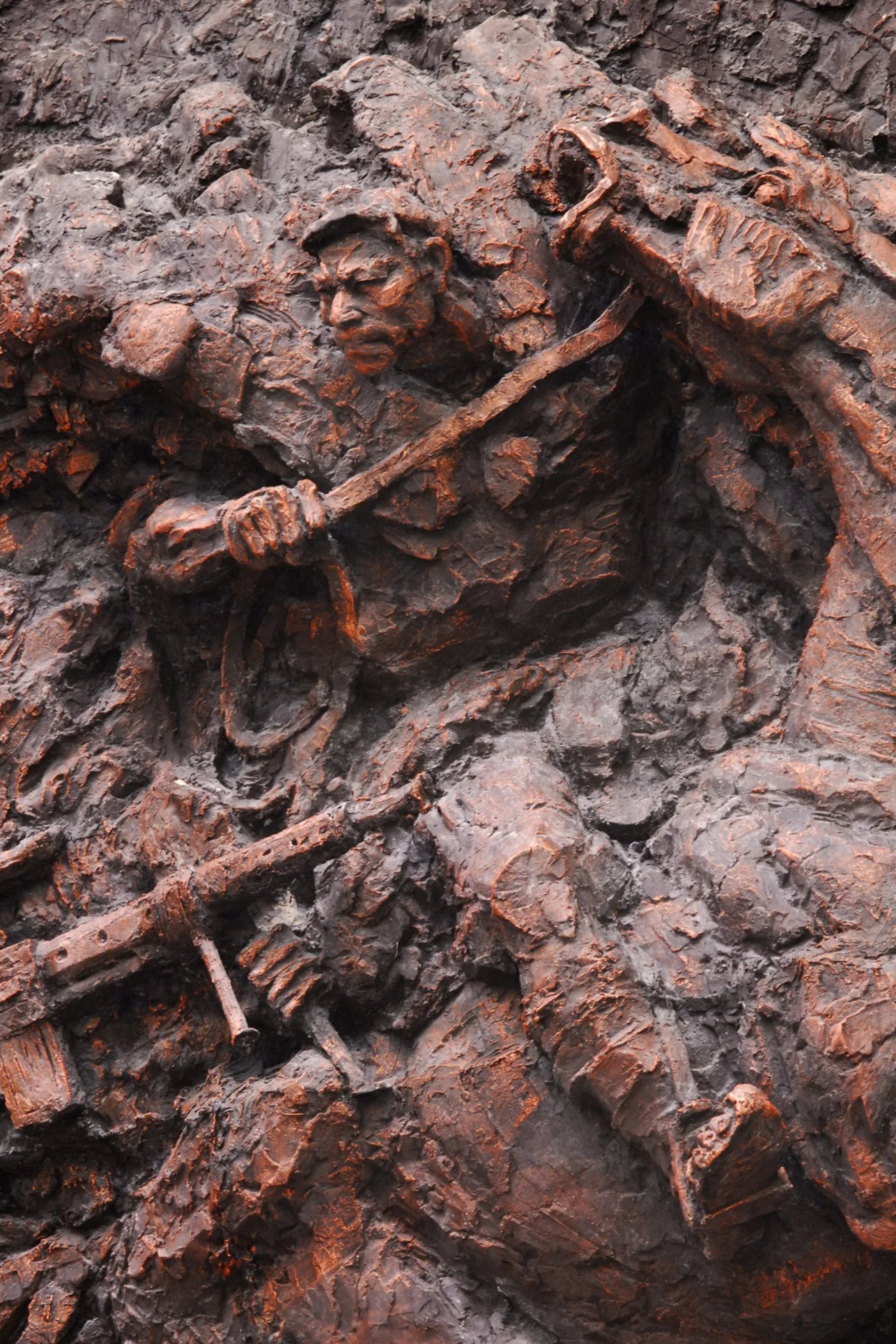
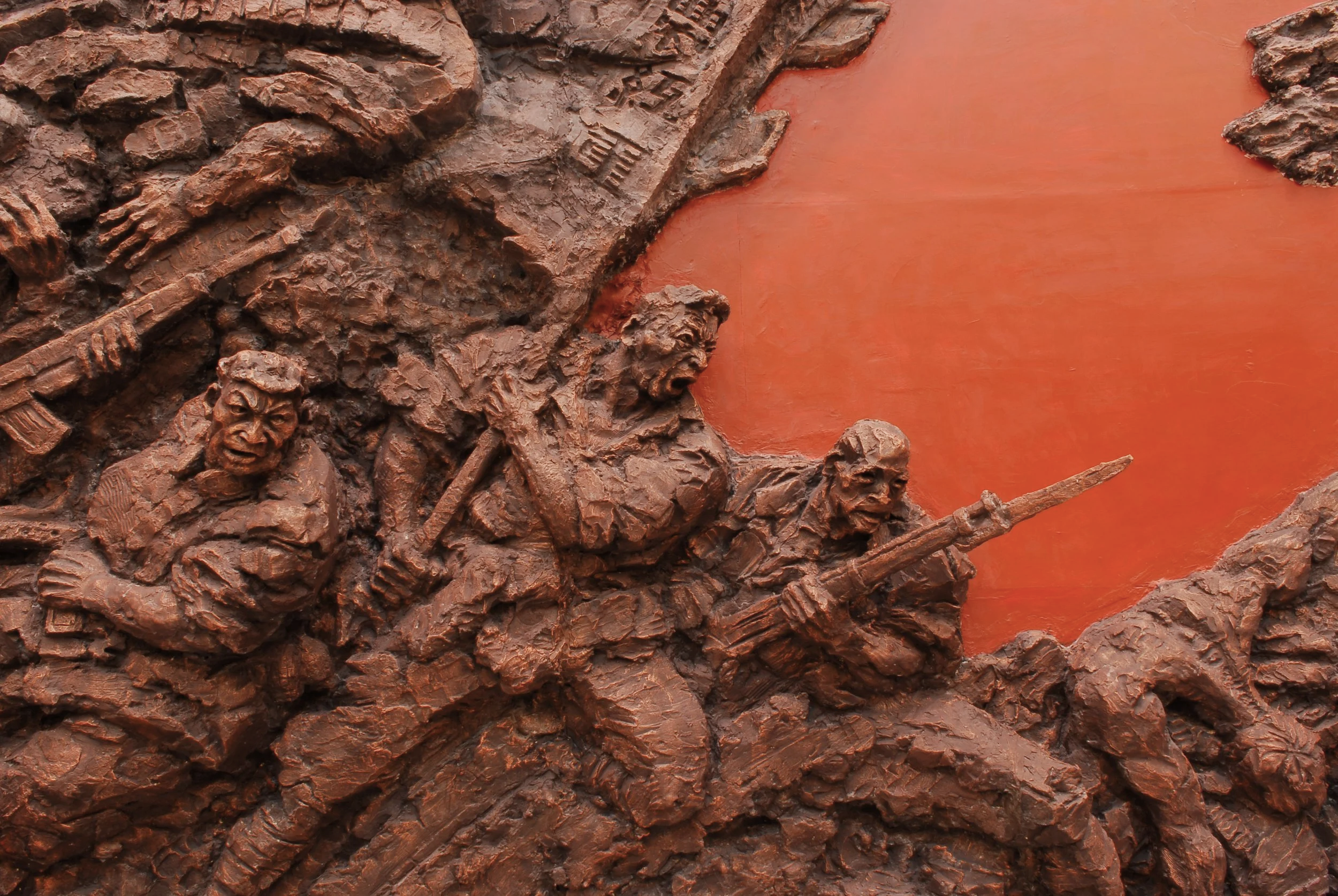
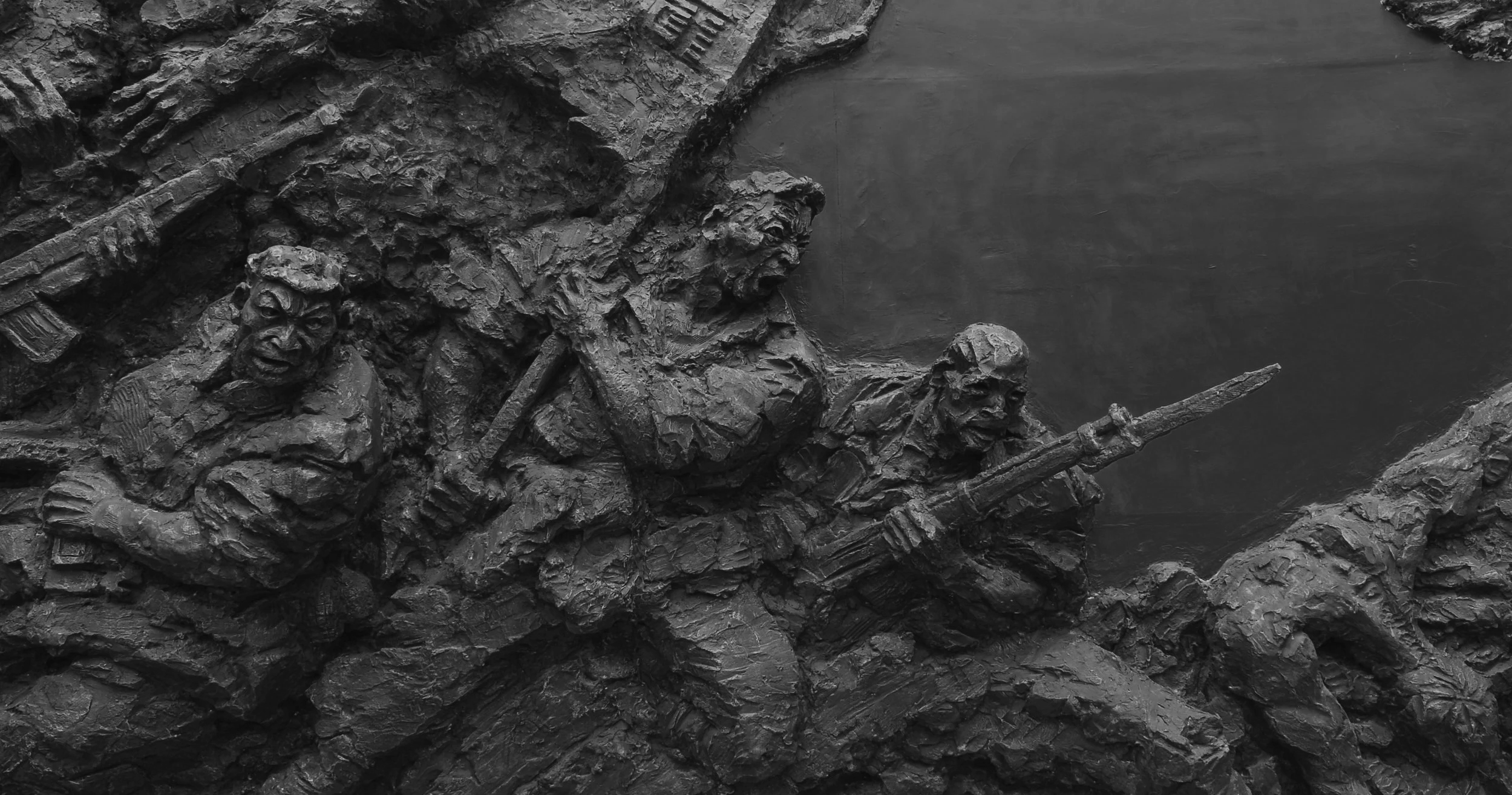
The Background Relief: The backdrop utilizes sharp triangular forms and lines that evoke a sense of oppression, capturing the perilous environment of aerial bombardments and ground encirclements. The abstract flames on the left represent the crucible of war, which then morphs into a giant wing soaring on the right—symbolizing a "phoenix nirvana" where the army rises from the ashes, transforming mortality into a sublime, breathtaking beauty of hope.
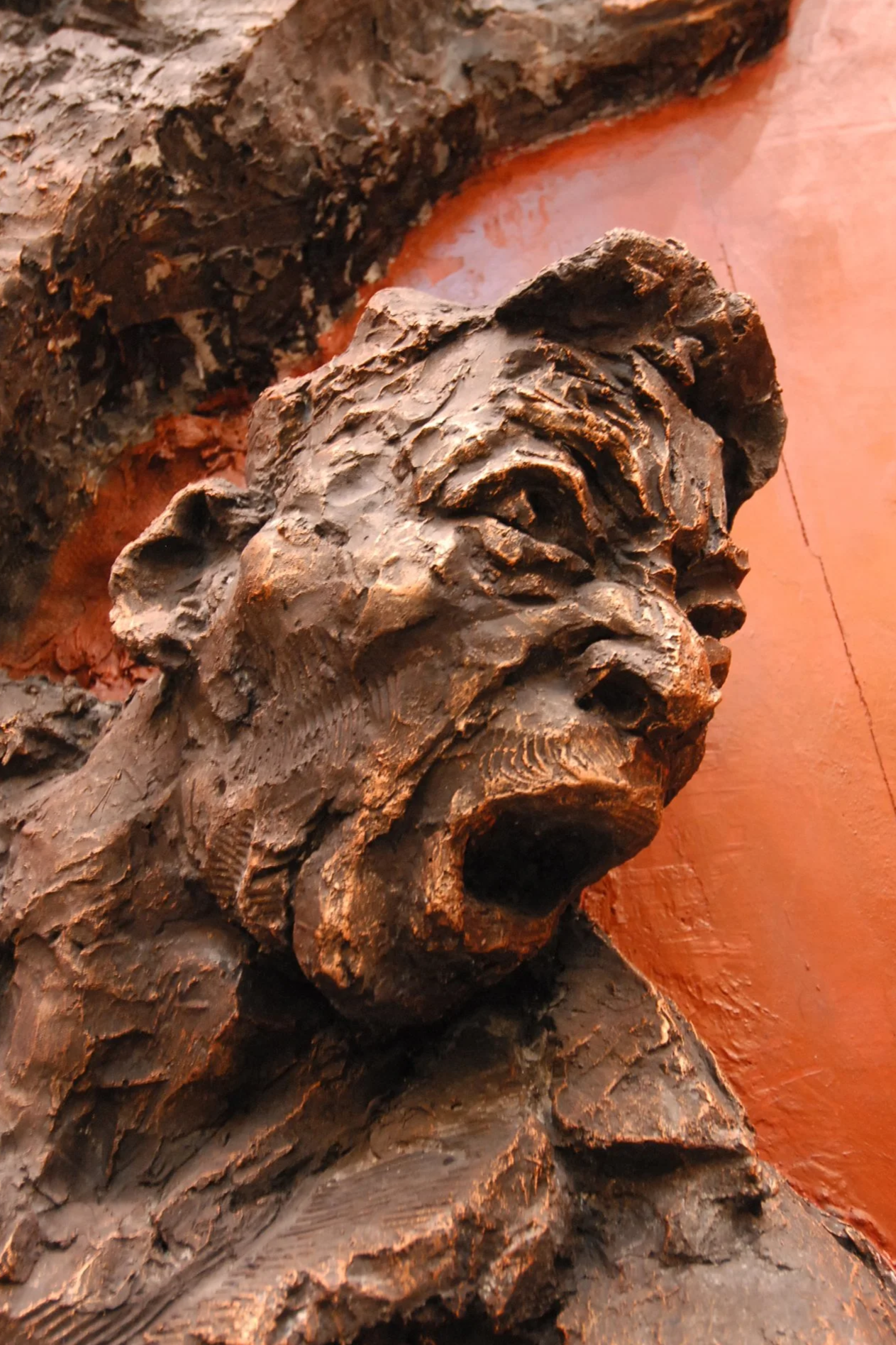
The narrative tension of the sculpture is further heightened by the juxtaposition of refined details and material textures. A highly creative "negative space" in the center of the relief outlines the surging Chishui River. The artist stained this negative space a deep crimson, which not only reflects the unique local Danxia landform but also resembles a spontaneous, elegant stroke of traditional Chinese calligraphy. The vibrancy of the red contrasts sharply with the deep, solemn bronze tones of the surrounding relief, establishing a poetic and contemplative space.
The composition also crystallizes four delicate, narrative details:
The ancient town of Tucheng, appearing rustic and time-worn against the backdrop of artillery fire;
A severely wounded soldier, refusing to yield, pressing forward with the support of a comrade;
A soldier’s foot that transitions seamlessly from low relief into a three-dimensional form, enhancing spatial depth while metaphorically implying that "the epic march was carved out step by step";
The graceful figure of a female soldier scooping water with a bowl, projecting a yearning for life and beauty amidst the harsh realities of war.
Striking a balance between grand narrative and intimate emotion, as well as literal representation and abstract symbolism, this artwork transcends the mere recording of history. It stands as a visual anthem to the indomitable human will and the timeless wisdom of survival against all odds.
Cross the Chishui-river