The Song of Gaixia - An Elegy for Heroism
The Song of Gaixia — An Elegy for Heroism
In his famous poem The Song of Gaixia, Xiang Yu wrote:
“My strength could pull up mountains, my spirit overshadowed the world;
Yet fate turned against me, and my steed would not move.”
Within these few lines lies the sorrow and helplessness of a hero facing the collapse of destiny. This emotion belongs not only to Xiang Yu, but also to countless heroic figures throughout human history who attempted to challenge their时代 with sheer force of will.
The same tragic spirit can be found in the life of Napoleon Bonaparte . After reshaping Europe through extraordinary ambition and power, he ultimately ended his days exiled on a lonely island. Whether at the banks of the Wu River or on Saint Helena, heroes often share the same fate: greatness followed by solitude and downfall. Yet what truly matters is not whether they ultimately succeeded, but that they once ignited the spiritual fire of an entire age.
Today’s world increasingly values efficiency, safety, and pragmatism, while heroism is often questioned or even mocked. Yet human civilization has always advanced because of those “untimely” individuals who dared to challenge darkness and transcend limitations. Without such spirits, humanity might never have risen beyond its primitive condition.
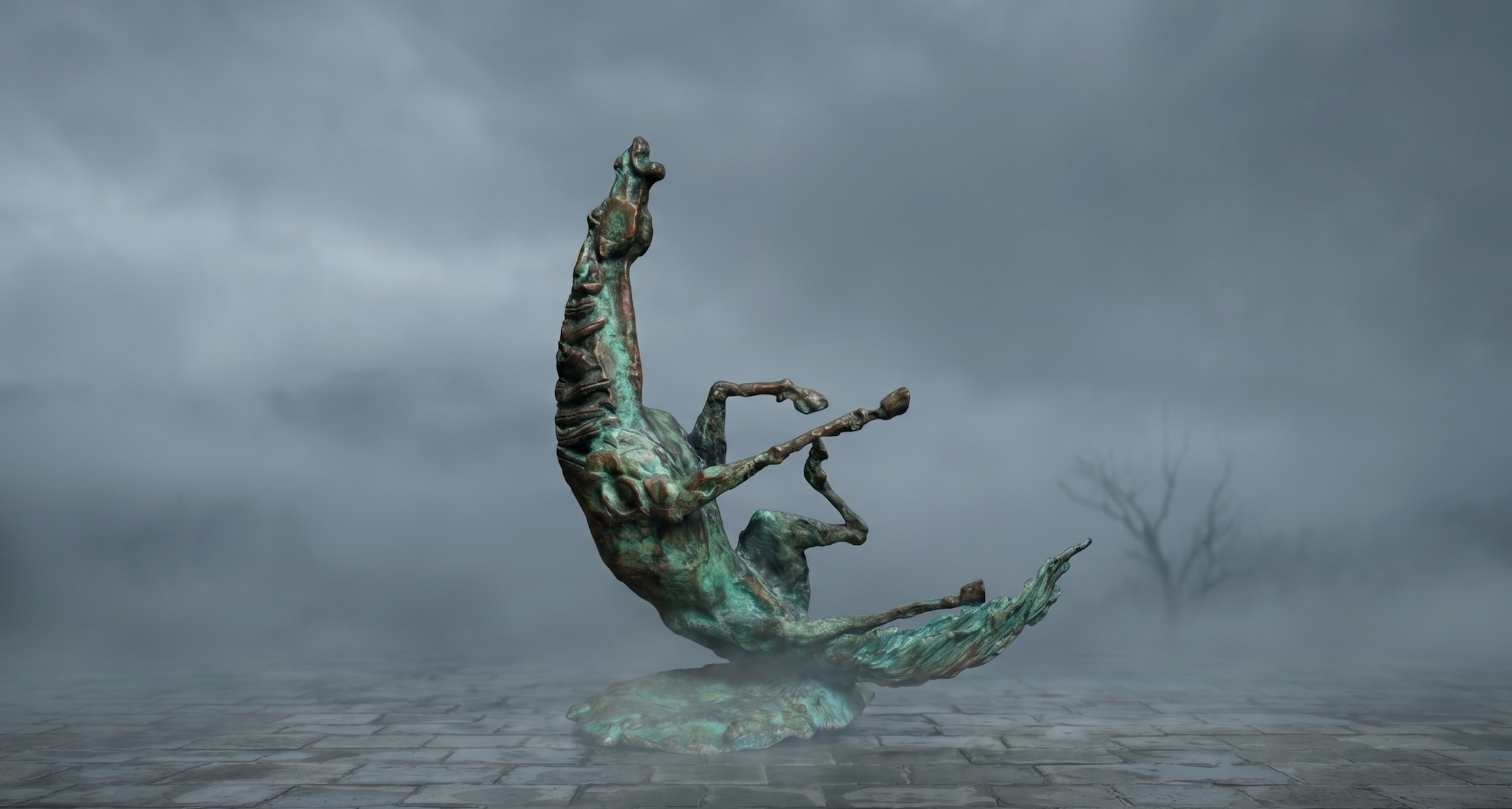
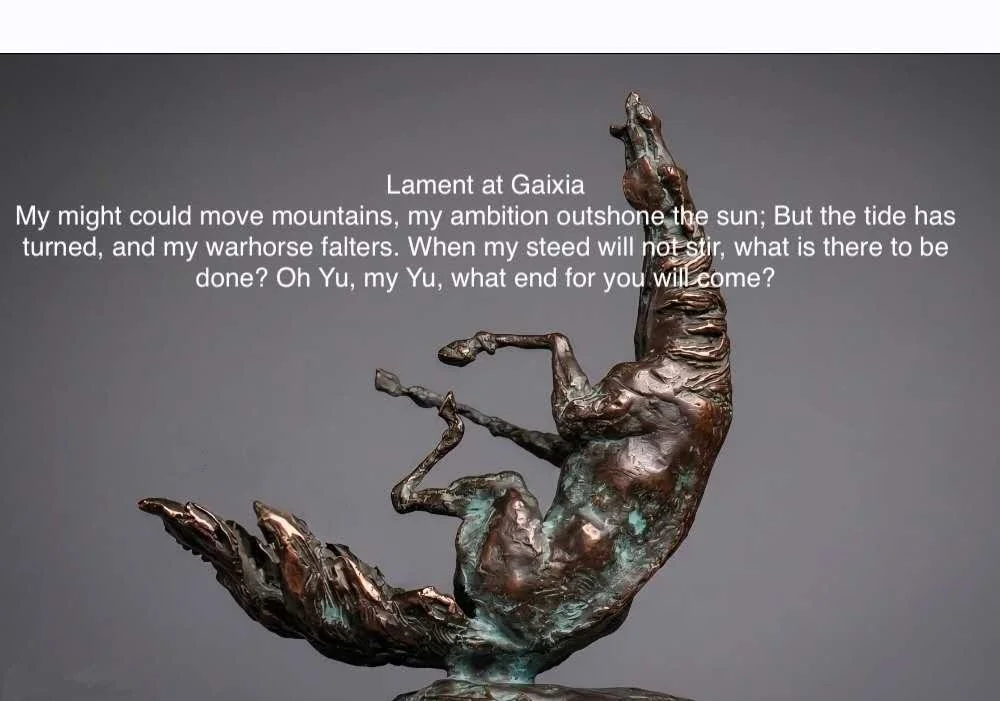
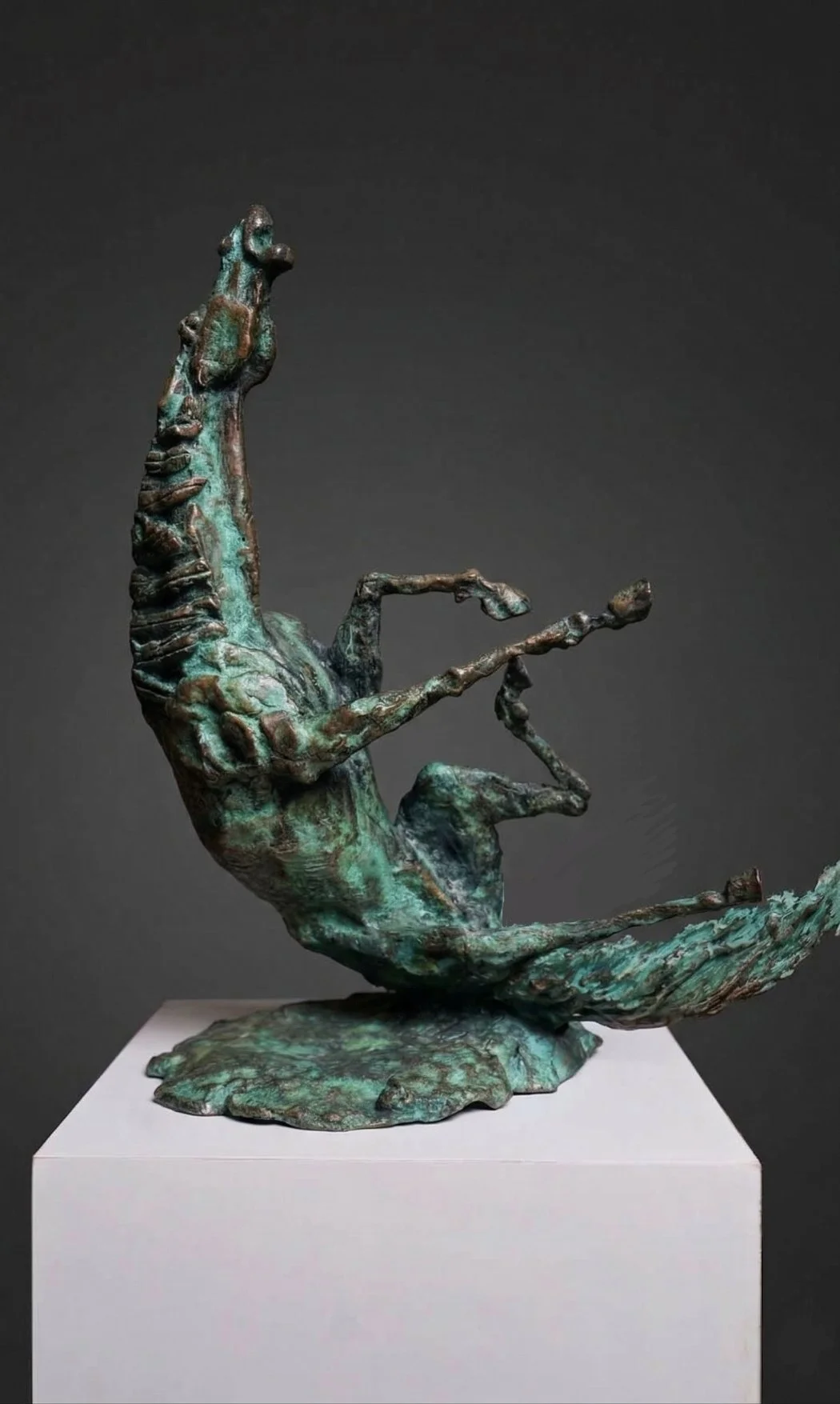
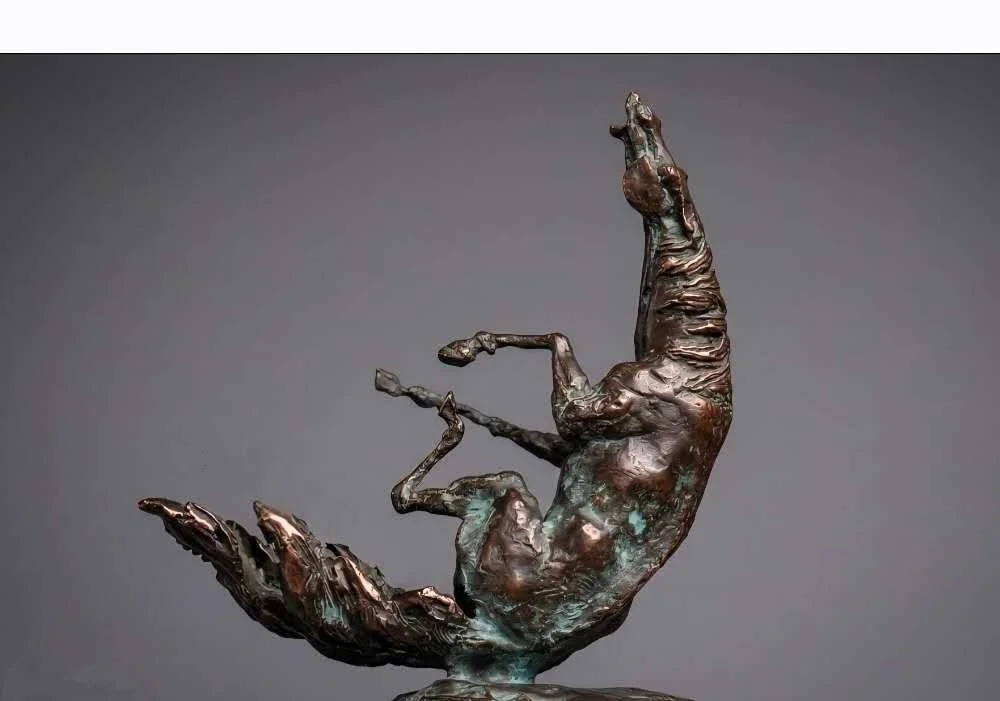
My sculpture The Song of Gaixia is a reflection on, and an elegy for, this heroic spirit.
The sculpture depicts a war horse on the verge of collapse, forming a crescent-like composition. It resembles a fading moon, but also a broken arc of history itself. Throughout civilizations, the horse has symbolized human will, ambition, and destiny. In this work, however, the horse no longer gallops forward; instead, it releases a final silent cry as it falls.
This emotion recalls Ludwig van Beethoven and his Eroica Symphony , especially the solemn and mournful Funeral March, which feels less like a lament for one individual than a farewell to an entire heroic age.
Therefore, The Song of Gaixia is not a celebration of victory. It is my elegy for heroism itself — mourning not only the fall of heroes, but also a modern world that is gradually losing its ability to look up to them.