The Odessy
Odyssey — Concept and Symbolic Meaning of the Sculpture
Odyssey is not merely an ancient tale about wandering and homecoming; it is a spiritual epic about the human soul struggling through desire, fear, temptation, and suffering in search of its true destination. My sculpture Odyssey attempts to reinterpret this timeless human dilemma through the fate of a warhorse.
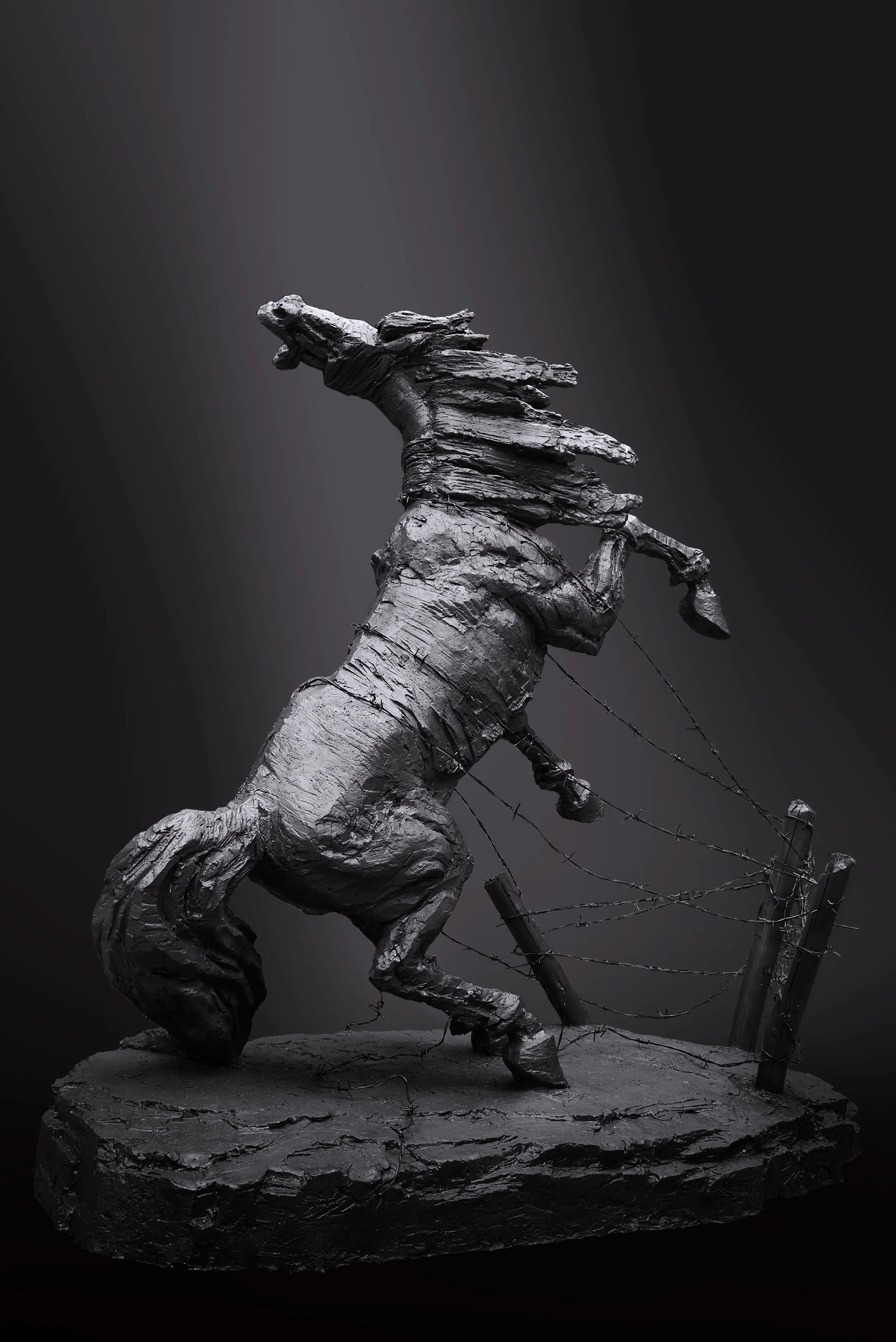
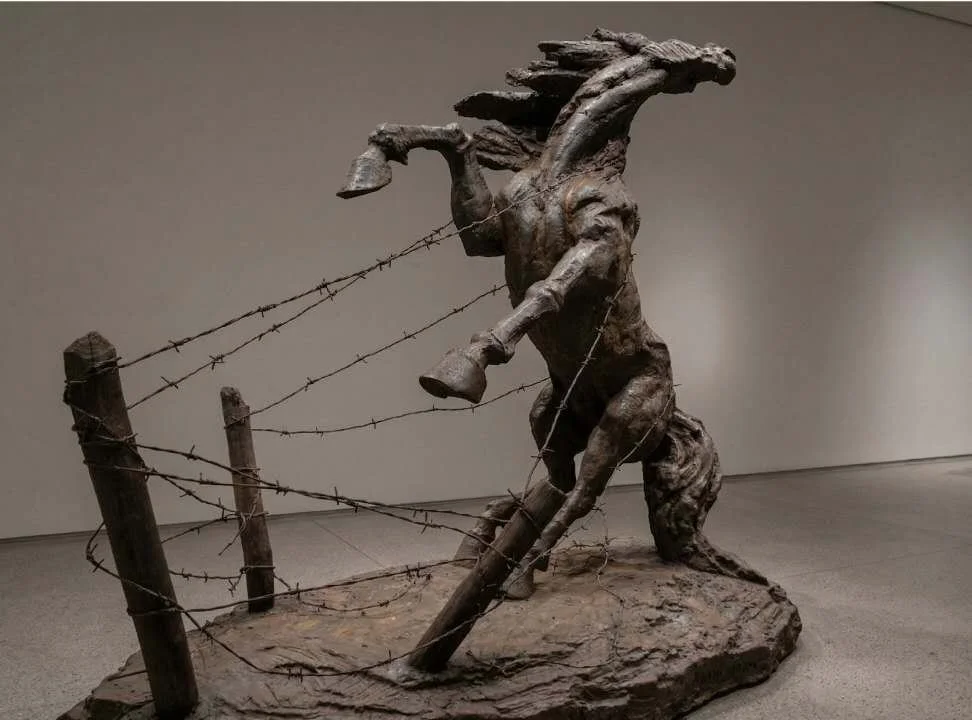
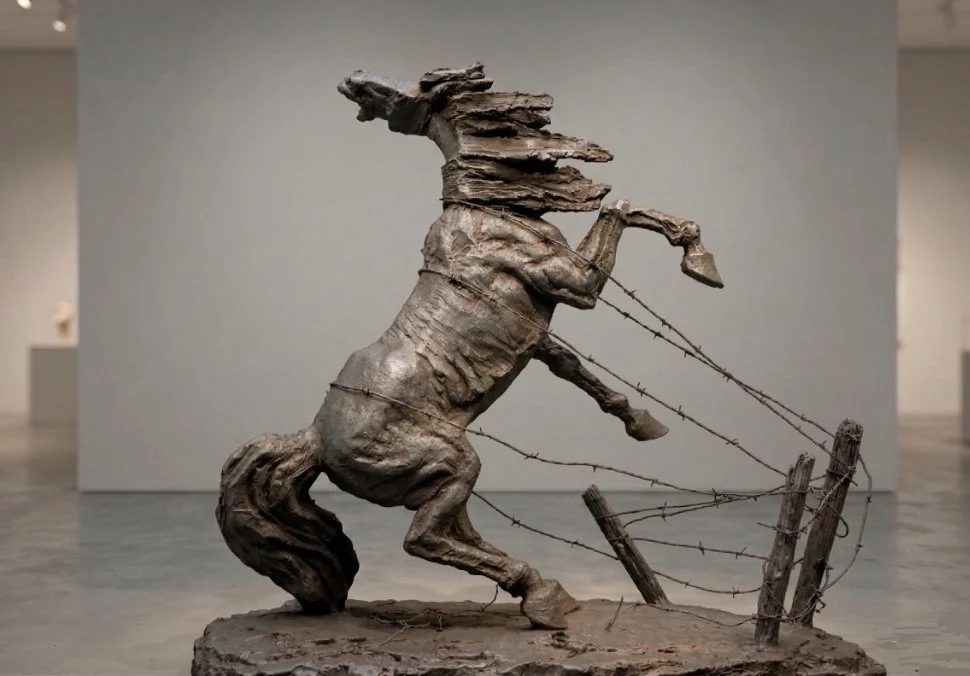
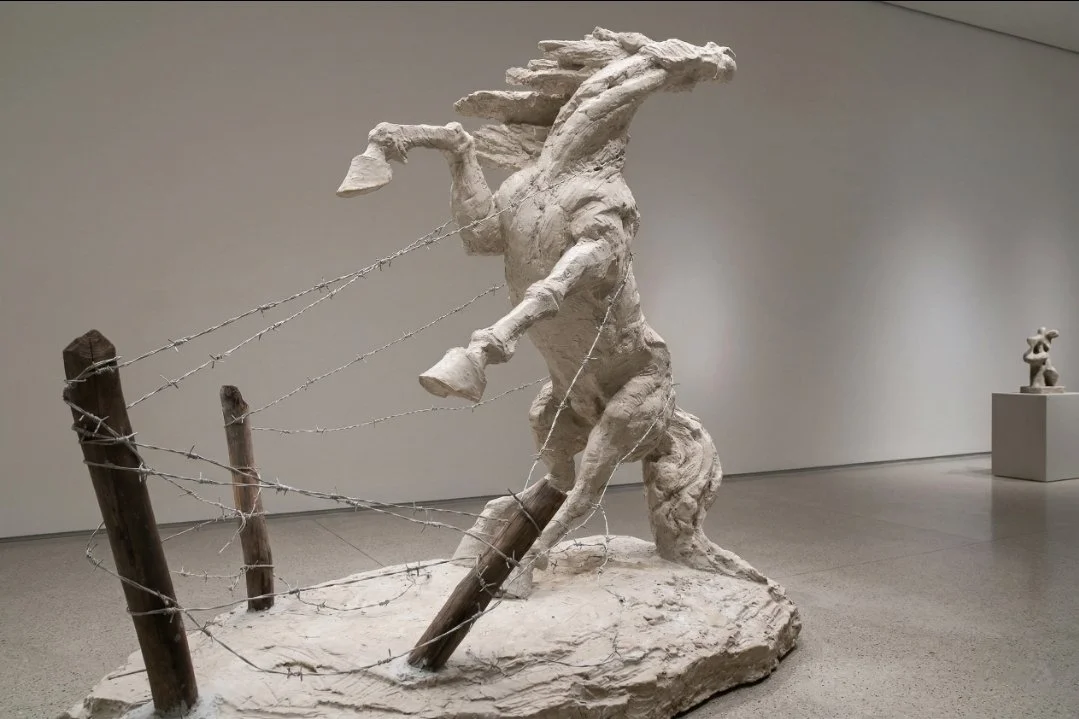
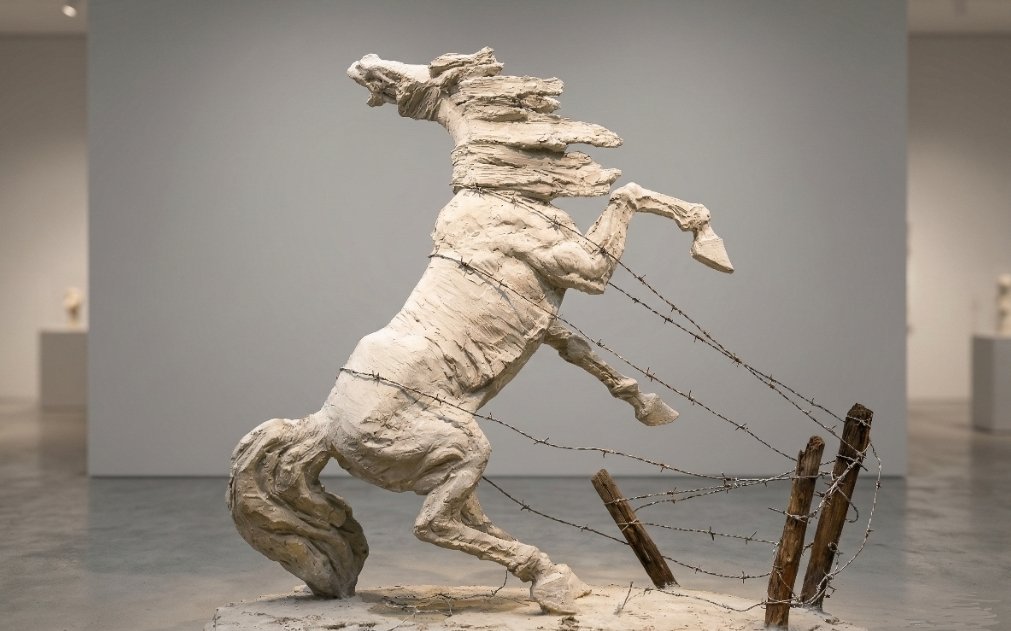
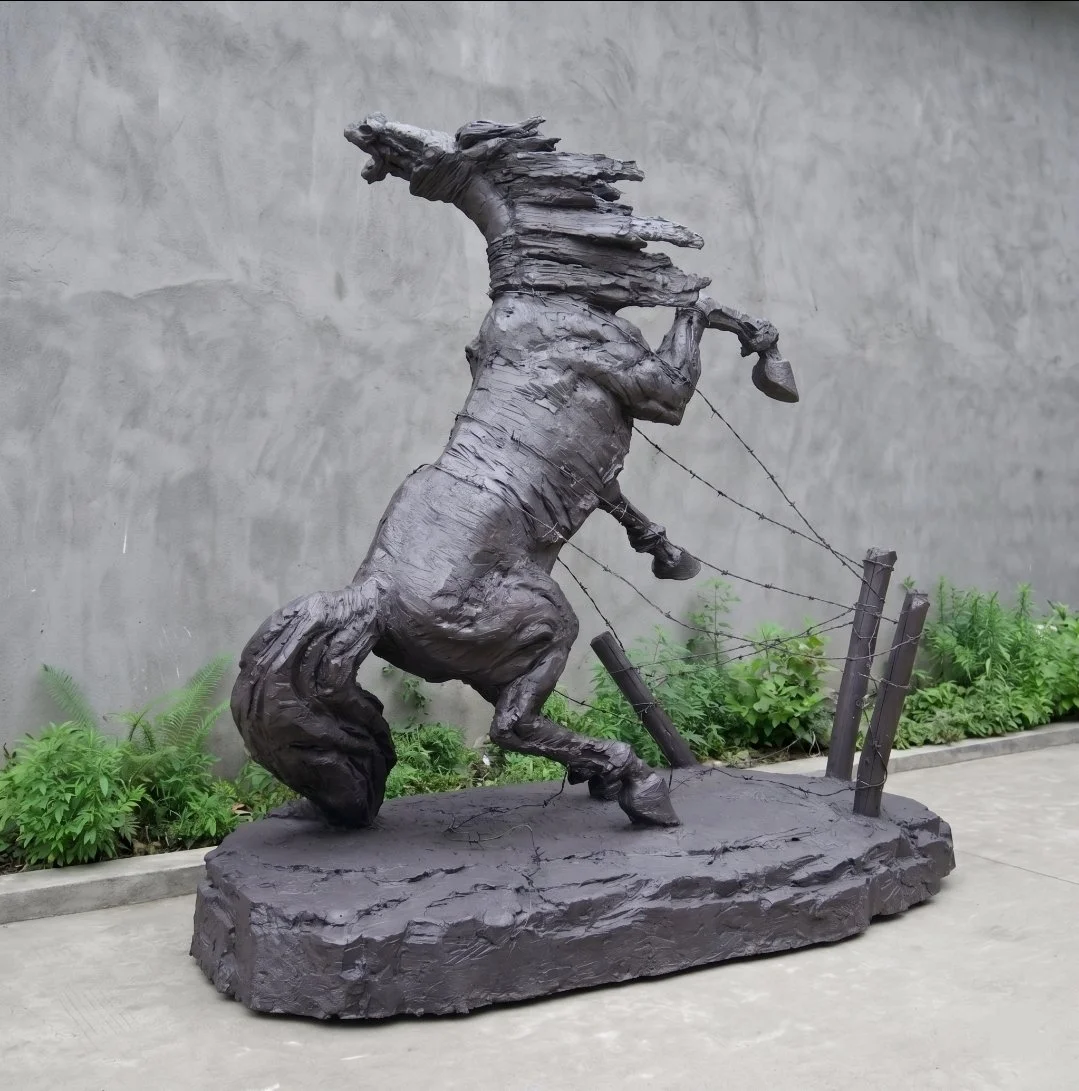
The central image of the work is a warhorse tightly entangled in barbed wire. Its head is raised in agony, muscles strained, body twisting violently as though desperately trying to break free and charge forward. Yet what truly traps it is not an enemy, but three wooden stakes driven deeply into the earth. Between them, the barbed wire intertwines like a snare of destiny, or like a spiritual prison created by civilization itself.
These three stakes symbolize the Buddhist concepts of greed, anger, and ignorance.
Greed represents endless desire.
Human civilization is born from desire, yet desire also drives conflict, war, and plunder. The warhorse, once a symbol of strength, speed, and glory, ultimately becomes part of the machinery of desire. It runs and charges without necessarily understanding why the war exists. In much the same way, modern people endlessly pursue fame, wealth, and power, believing they are chasing freedom, while often losing themselves in the process.
Anger symbolizes rage, hatred, and destructive force.
The barbed wire itself carries a cold sense of violence. It reflects modern civilization and warfare — industrialized, mechanized, rationalized — yet capable of unprecedented cruelty. The more the horse struggles, the tighter the wire cuts into its flesh, just as humanity deepens its suffering through hatred and confrontation. War wounds not only the body, but also tears apart the soul.
Ignorance is the deepest blindness of all.
Human beings often do not truly understand what binds them. We think we are pursuing happiness, yet may merely be trapped by desire; we think we are defending justice, yet may only be manipulated by emotion; we think we are conquering the world, yet ultimately lose our spiritual home. This ignorance is the root of humanity’s predicament.
The three stakes, the three realms, and the poisons of greed, anger, and ignorance, together with the barbed wire cutting into flesh, are not merely structural elements. They are spiritual thorns embedded deep within civilization itself. They symbolize a shared spiritual theme found in both Eastern and Western thought:
Life struggles within the net of fate,
while simultaneously seeking a freedom beyond bondage.
The sculpture is titled Odyssey because it is not simply about war, but about wandering itself.
In Ulysses, modern wandering takes place within the city and consciousness; in Faust, humanity tears itself apart through desire, creation, and infinite striving; and in Divine Comedy, the soul journeys through Hell, Purgatory, and Paradise in search of ultimate redemption. At their core, all ask the same question:
“How can humanity transcend the dilemmas of worldly existence?”
Thus, this warhorse is both the horse of ancient battlefields and a metaphor for the modern human spirit.
It embodies the heroic will found in Homeric epics, while also representing the alienated, restrained, and fragmented condition of life within modern civilization. It longs to run toward the horizon, yet remains trapped within the barbed wire of a civilization humanity itself has created. Its struggle is not merely physical, but profoundly spiritual.
In the sculpture, the stakes have not completely destroyed the horse. The wire remains tense, carrying the sense that it could snap at any moment. I hope this state conveys not despair, but the explosive threshold of awakening.
Because the true Odyssey is not simply about reaching a destination, but about realizing that:
Humanity’s greatest enemy is often not the external world, but the greed, anger, and ignorance within;
and humanity’s deepest wandering is not geographical exile, but the soul’s inability to return to itself.
The warhorse therefore becomes a profoundly tragic symbol — powerful, yet never truly free; longing to gallop, yet trapped in bondage; standing on the battlefield, yet ultimately fighting against fate itself.
Through Odyssey, I hope viewers not only feel the cruelty of life as a battlefield, but also recognize that every person in modern civilization may be living through their own odyssey. We are driven by desire, torn apart by anger, and deceived by illusion. We run endlessly through the noise of the world, forgetting our true way home.
And perhaps “homecoming” is not the return to a physical place, but the liberation of the soul itself. To attain spiritual wholeness, one must — as suggested in Diamond Sutra — use the “diamond wisdom of prajñā” to cut through attachment, delusion, and the obsessions of the human heart.